
What Is Breathwork? Benefits for Stress, Anxiety, and Sleep
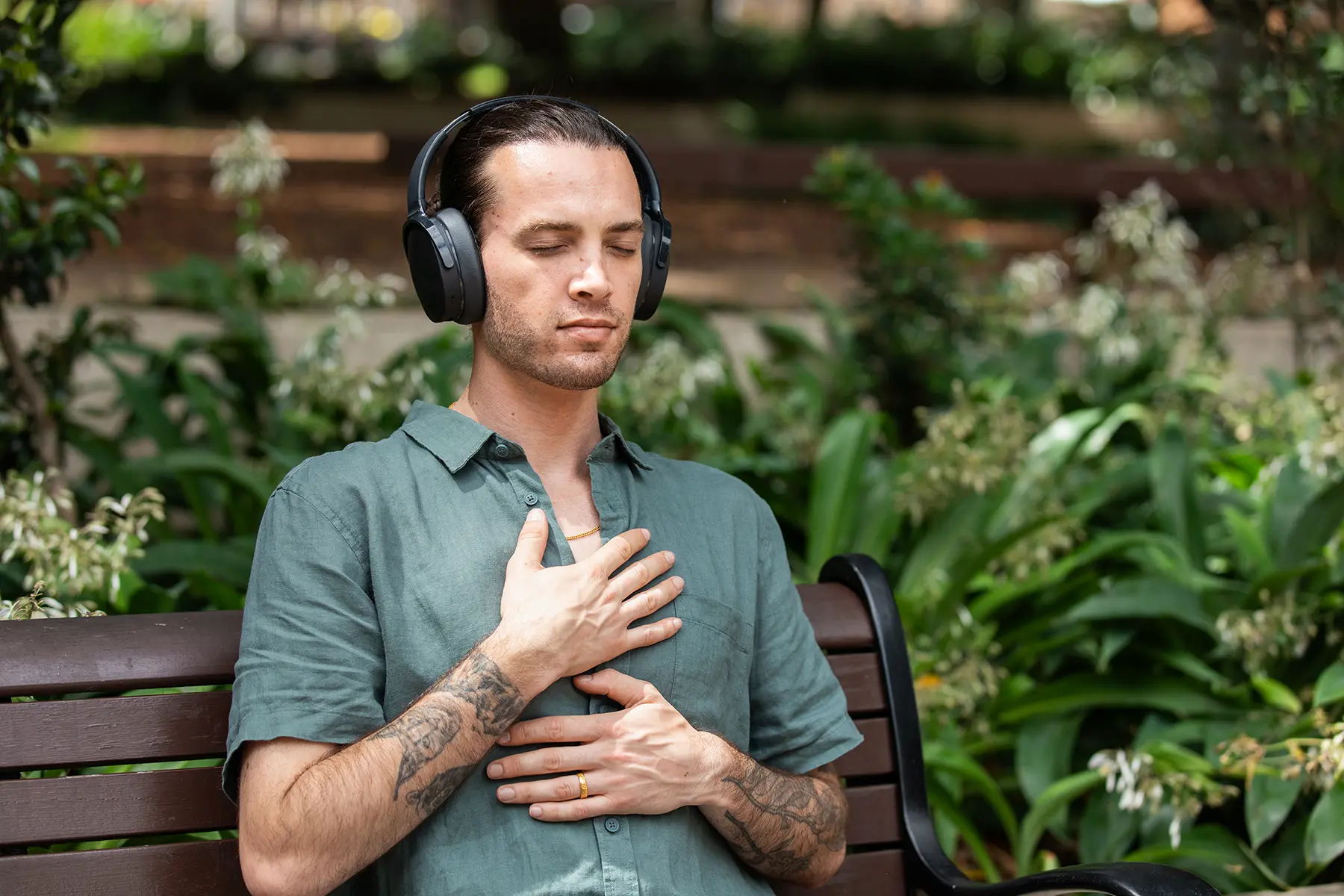
Breathwork is a simple way to calm your mind, reduce stress, and improve your overall well-being. An expert explains the science behind conscious breathing and how to get started.
Anywhere, at any time, we all have the option to become calmer, more centered and stronger through conscious awareness and control of our breathing, a practice called breathwork.
“We breathe automatically all day. Breathwork is an umbrella term for intentionally changing our breathing. Many breathing practices are simple and can be learned by adults and children,” explains Morgan Kidd. She is a board-certified health and wellness coach at the Osher Center for Integrative Health at the University of Miami.
Breathwork involves paying close attention to how we are breathing in order to influence our physical, mental or emotional state. Sometimes it means slowing down the breath or breathing more deeply. It might mean changing the length of the inhale or exhale. “It can also involve simply observing the breath without trying to change it,” Ms. Kidd says.
We each breathe in about 3 to 4 million liters of air each year, according to the Encyclopedia Britannica. That’s more than the capacity of an Olympic-sized swimming pool.
An approach everyone can use
Infants and children know instinctively how to regulate their own states of being using the breath. “A child will wail for a time, but as they start to calm down their breathing changes and sounds like huh huh huuuuuuh. The body intuitively knows that with a different breathing pattern, it can regulate and calm itself,” she says.
Over time, as people grow, they tend to forget how to intuitively use the breath this way. But relearning to alter your breathing in order to change the state of your body and your mind is fairly easy for most people.
When asked who breathwork is good for, Ms. Kidd replies, “For anyone who is breathing.” A growing body of evidence shows that deep breathing, in particular, supports well-being.
Breathwork offers many benefits.
British researchers recently reviewed of a large number of studies about the benefits of breathwork. They found that people who practiced slow breathing exercises reported lower levels of stress, anxiety and depression compared to people who did not do the exercises. Other studies support the effectiveness of breathwork to reduce pain level and lower blood pressure for people with heart disease. It’s proven helpful for people who want to quit smoking.
And for the millions of Americans who have trouble sleeping, breathwork has been shown to be a simple, natural and effective approach to getting a more restful night.
The uniqueness of the breath
Most bodily functions hum along for you, beyond your control.
- Your heart governs your circulation.
- Your digestive organs process your food and eliminate waste.
- Your endocrine system sends hormones out to do their many jobs.
And you have no conscious control over any of these processes.
Then there is breathing, the one major bodily function you can voluntarily control. And when you connect with your breath and control your breath, you influence all those other systems. If you decide to breathe in a way that promotes relaxation, all the other organs experience beneficial effects of that change.
Begin by noticing your breath.
If the notion of altering your breath sounds a bit strange, don’t worry. Starting to use breathwork is as basic as simply pausing to observe your breath.
“Just notice your breath without trying to change or fix it. Avoid labelling the way you are breathing as “good” or “bad.” Also notice what happens in your body when you bring your awareness to your breath. Simply paying attention in these ways is an important way to start,” Ms. Kidd says.
Here are some specific ways to observe your breath and body, without judgment. You can place your hand on your belly to feel it rise and fall. You will feel your midsection expand as your lungs fill with air and contract as you exhale and air leaves your body. That contraction with the exhalation is like a corset being tightened.
Another way to start noticing your breath is to focus on the sensations created by the air moving across your upper lip as you inhale and exhale. Notice the differences in the temperature of the inhalations, which feel cool, and the exhalations, which feel warm.
Conscious breathing heightens awareness.
“The more you stay with your breath, the more you start to notice what is there, along with other things that you have not been paying attention to. You may notice where you are holding tension in the body. Sometimes emotions come up,” she says. You may notice your posture or that you feel fatigued.
Observe the rate of your breathing. Is it fast or slow? Is it deep, filling your belly, or shallow, filling only your upper chest?
The roots of breathwork stretch far and wide.
For eons, cultures worldwide have made use of practices centered on breathing. Here’s a partial list.
Ancient Indian texts established “pranayama” as the basis of yoga. “Prana” means life force and “ayama” denotes control or extension. Different yogic breathing techniques serve varied purposes. Some balance the brain’s two hemispheres. Others enliven the mind or prepare it to meditate. Others detoxify the body.
Qi gong and tai chi arose in China to teach the channeling of “qi” or “chi.” Spelled either way, the term means the life force in all living things. Both practices encourage breathing deeply through the nose much of the time. Practitioners strive to sync their inhales and exhales with slow body movements. These practices can promote relaxation and improve wellbeing.
Tibetan Buddhists use the breath to support meditation practices aimed at achieving enlightenment.
Indigenous tribes in North America use the breath to support both body and spirit. Some practice breathing techniques in sweat lodges. Some Native Americans harmonize their breathing with chanting and drumming.
In Hebrew, one word, ru’ach, means spirit, wind and breath. This captures the unique role played by the breath in fostering human well-being and whole, physical, mental and spiritual.
Deep breathing increases your capacity, not just for air but also for life.
Most of us move through our days and our lives in a somewhat automated way. We stick to our routines without thinking much about them. “By taking time to breathe with awareness, you come out of that automation. You allow yourself to be present,” says Ms. Kidd.
She suggests asking yourself how much capacity your body allows for the breath. This can mean observing if you are breathing shallowly, confining your intake to your chest. Or are you breathing deeply into your belly, the way infants do?
“You can think about this from an emotional or even spiritual level almost like a metaphor. As we make room for the breath, we can also reflect on how we make room within ourselves to hold what life brings,” Ms. Kidd says. This mindset and the practice of breathing slowly and deeply, especially in times of stress or crisis, has great practical value.
When life feels stressful in the usual ways (running late, losing things) or even when it feels overwhelming during real crises, deep breathing can help. We cannot control everything that happens in life. “But we can use belly breathing to help us pause and feel more present. That pause can create a little more space to respond to what we cannot control,” she says.
Written by Milly Dawson. Reviewed by Morgan Kidd, MS, NBC-HWC.

