Colon Cancer Is Rising in Younger Adults — Use This Prevention Checklist to Reduce Your Risk

Colorectal cancer is increasingly being diagnosed in younger people, including those in their 20s, 30s and 40s, often with few or no early warning signs. This shift has reshaped how physicians think about prevention, and prompted national experts to lower the recommended age to begin screening to 45 for individuals at average risk.
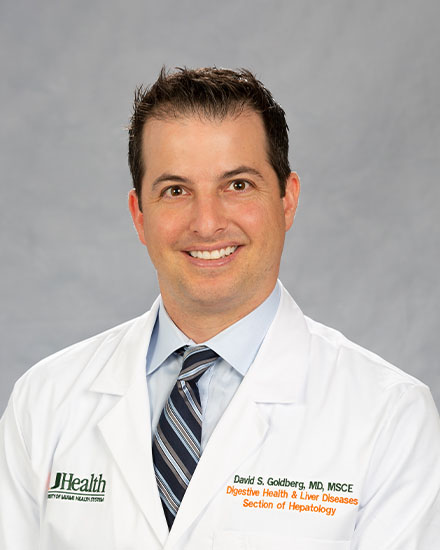
“We are seeing more patients diagnosed at younger ages than we would have expected a generation ago,” says David Goldberg, M.D., a physician and researcher at Sylvester Comprehensive Cancer Center, part of UHealth — University of Miami Health System. “That makes prevention, symptom awareness and timely screening more important than ever.”
Researchers have documented steady increases in early‑onset colorectal cancer over the past two decades, even as rates among older adults have declined due to widespread screening.
The increase in colorectal cancer among young people has contributed to a startling reality. It is now the leading cause of cancer death in the U.S. in people under the age of 50, up from the fifth-leading cause in the early 1990s.
While no single reason for this increase among younger people has been identified, experts believe the trend reflects a complex mix of factors, including diet, obesity, physical inactivity, environmental exposures and changes in the gut microbiome.
The good news: Most individuals can lower their risk of colorectal cancer with an approach grounded in screening and healthy habits. Consider this your colon cancer risk-reduction checklist.
Don’t assume being under 50 means you can’t get colon cancer
The incidence of colorectal cancer is rising fastest among adults under 50, and as many as 75% of colorectal cancers in this age group are diagnosed at an advanced stage. One of the reasons is that symptoms may be dismissed when younger people report them.
“Age alone should never be used to rule out colorectal cancer,” Dr. Goldberg says. “If symptoms persist, they deserve evaluation, whether someone is 35 or 65.”
Symptoms such as black or very dark brown stools (which occurs when blood mixes with stool), mucus in the stool, rectal bleeding, unexplained weight loss, abdominal pain, persistent fatigue or a change in bowel habits that lasts more than a few days should always be discussed with a physician.
Get regular screenings
Screening remains the single most effective way to prevent colorectal cancer. Most cancers begin as slow‑growing polyps that can be detected and removed before they become dangerous.
Experts recommend that adults at average risk begin screening at age 45. Screening options include stool‑based tests completed at home, colonoscopy, CT colonography, sigmoidoscopy or a blood test.
“Colonoscopy is considered the gold standard for detecting and removing polyps, which are pre-cancerous lesions, but it is invasive,” Dr. Goldberg says. “Therefore, experts feel the best test to screen for colorectal cancer is the one a patient is willing to get. For example, an annual at-home stool test is considered an alternative to colonoscopy, although it still requires a colonoscopy in the setting of a positive test.”
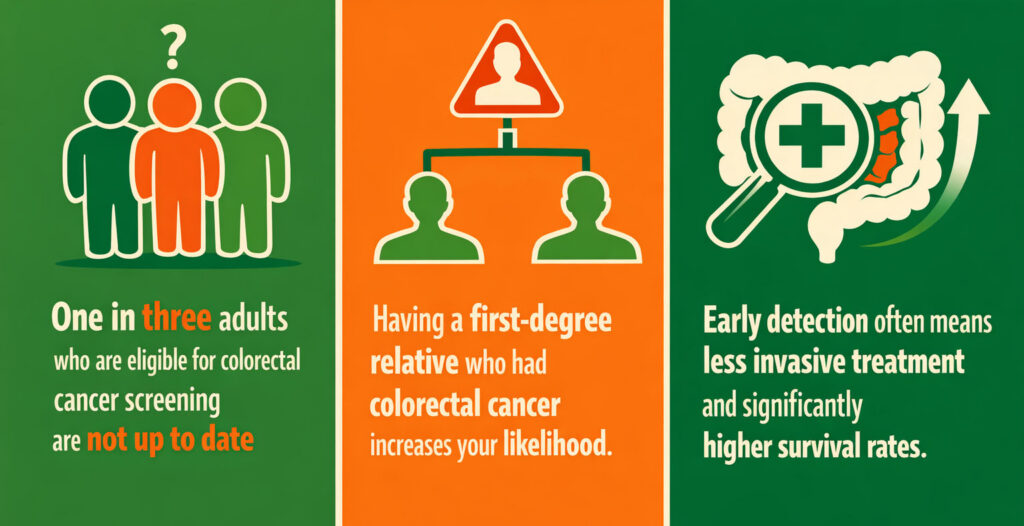
Despite clear guidelines, about one in three adults who are eligible for screening are not up to date, leaving early-stage cancers undetected.
Know your personal risk
Family history plays a major role in colorectal cancer risk. Having a first‑degree relative who had colorectal cancer or precancerous polyps increases your likelihood of developing the disease. This is especially true if that relative was younger than age 50 when they were diagnosed, or if more than one first-degree relative has been affected. Certain genetic and inherited conditions can also increase your risk of colon cancer.
Other risk factors include a personal history of polyps, inflammatory bowel disease, having type 2 diabetes and prior radiation to the abdomen or pelvis. In addition, Jews of Eastern European descent (Ashkenazi Jews), American Indian, Alaska Native and African American individuals have higher rates of colorectal cancer.
In some of these situations, it may make sense to start screening earlier and be screened more often. Talk to your primary care provider or a specialist to determine an individualized screening plan.
“Having a risk factor does not mean that you will get cancer,” Dr. Goldberg says. “But knowing that you do is an opportunity to pay closer attention to your screening plan and to consider lifestyle changes that may reduce risk.”
Build a colon‑healthy lifestyle
Daily habits influence colorectal cancer risk over time. Research consistently shows that the following steps can lower risk:
- Stay physically active
- Maintain a healthy weight
- Eat a diet rich in fruits, vegetables, whole grains and fiber
- Limit red meat, processed meats and sugary drinks
- Avoid smoking tobacco
- Moderate your alcohol intake
“Healthy choices, from how much you move each day to the foods you choose and the habits you avoid, shape cancer risk over decades,” Dr. Goldberg says. “It’s never too early or too late to make changes that can lower your colorectal cancer risk.”
Consider clinical trials as part of prevention and care
At Sylvester, clinical trials are a cornerstone of colorectal cancer prevention, detection and treatment. As South Florida’s only National Cancer Institute–designated cancer center, Sylvester conducts a wide range of research, including:
- Prevention and early‑detection studies focused on identifying cancer or precancerous changes sooner, particularly in higher‑risk populations
- Precision medicine trials that match therapies to the genetic and molecular features of individual tumors
- Immunotherapy and targeted therapy studies designed to improve outcomes and reduce side effects
“Clinical trials allow us to move discoveries from the lab into patient care,” Dr. Goldberg says. “They are essential to improving prevention strategies and expanding treatment options, especially as colorectal cancer becomes more common in younger adults.”
For example, one clinical trial underway at Sylvester aims to determine when an individual needs their next colonoscopy after a polyp is found and removed. The trial, called FORTE, is sponsored by the National Institutes of Health.
“We are one of the sites assessing whether patients at average risk should have a follow-up colonoscopy in five years or 10 years when one or two small polyps are found on their screening colonoscopy,” says Dr. Goldberg, who is Sylvester’s principal investigator for the trial.
Sylvester researchers also study colorectal cancer in the context of health gaps, working to understand why some populations are diagnosed later or experience worse outcomes and how screening and prevention efforts can be improved at the community level.
Don’t delay colorectal cancer prevention
Colorectal cancer prevention can’t wait until later in life. As more younger adults are diagnosed, awareness, lifestyle choices and early conversations with a physician matter more than ever.
Early detection often means less invasive treatment and significantly higher survival rates. Regular checkups, honest conversations about risk and staying current with screening recommendations can save lives.
“Think about colon health the same way you think about blood pressure or cholesterol,” Dr. Goldberg says. “It’s a normal, essential part of preventive care, at every age.”
Learn more about colorectal cancer screening, genetic predisposition, prevention strategies or clinical trials.
Written by Rochelle Broder-Singer.
Tags: cancer screening, Clinical Trial, colon cancer, colonoscopy, colorectal cancer, Dr. David Goldberg, Sylvester Comprehensive Cancer Center

