
How to Care for Your Skin During Perimenopause, Menopause
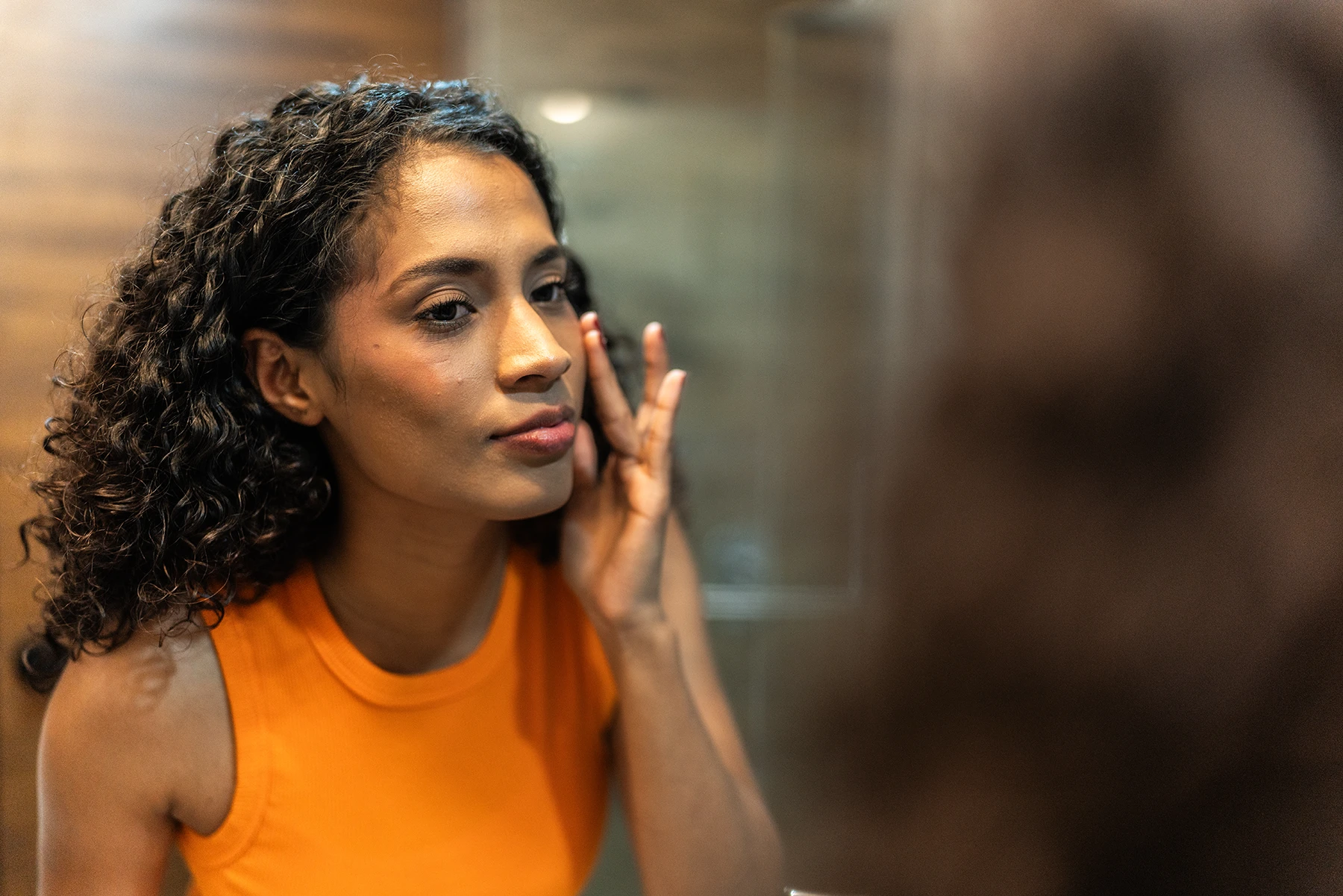
During perimenopause and menopause, women can experience many changes to their skin due to the body’s hormonal changes. You may experience increased skin dryness, thinning, and loss of elasticity, which can lead to more wrinkles and sagging.
Other changes may include:
- increased skin sensitivity
- itchiness, hormonal acne
- a higher risk of rashes
- dark spots (hyperpigmentation and melasma)
This is due primarily to a decline in the body’s hormone estrogen. This change weakens the skin barrier and triggers a reduction in the skin’s production of oil (sebum), collagen, and hyaluronic acid. Years of accumulated sun exposure and certain lifestyle habits can also contribute to unwanted skin changes that start to appear when women reach their late 30s and 40s, coinciding with the typical start of perimenopause.
What actually works on aging skin?
The beauty industry and social media are trying to convince you that an arsenal of skincare products and supplements can turn back the hands of time and prevent your skin from further signs of aging. The number of anti-aging serums, creams, powders, and pills on the market is not only overwhelming and expensive, but not all of them are proven effective.
Sun protection
Proven: Wearing SPF every day helps prevent signs of photoaging (wrinkles and hyperpigmentation) and lowers your risk of developing skin cancer.
Wear sunscreen or moisturizer with at least SPF 30 daily. Mineral-based products (often containing zinc) are typically less irritating on sensitive skin. “Consider a tinted sunscreen to help minimize the appearance of pigmentation and signs of aging,” says Andrea Dale Maderal, M.D., a dermatologist with the University of Miami Health System. Even if you didn’t wear SPF in your 20s and 30s, wearing it daily throughout your 40s and 50s can absolutely still help prevent wrinkles, she says.
Hydrating serums and creams
Proven: Topical products including hyaluronic acid, ceramides, and petroleum jelly can lock in skin’s moisture and support the skin barrier, relieving dry, itchy skin.
Contrary to popular belief, “Petrolatum-based products, like Vaseline and Aquaphor, do not clog pores nor trigger acne,” Dr. Maderal says. “These products can be very hydrating. They work best if you first apply a moisturizing cream. Then, Vaseline helps to lock in the moisturizer by occluding it into place.”
“Anti-aging” creams and serums
Claims: Many creams and serums claim to increase skin’s collagen and elastin production; speed up cell turnover; and reduce skin’s dullness, wrinkles/fine lines, and hyperpigmentation. Research shows mixed results.
Retinol (over-the-counter products and higher strength prescription creams like Tretinoin)
“This is proven effective,” says Dr. Maderal, who bases her clinical recommendations on research-backed findings. “Retinols and prescription retinoids are some of the best topical treatments that we have to prevent photoaging (skin sagging, sun spots, wrinkles, and dullness caused by sun exposure). However, no retinol can stop your skin from getting older.”
Estriol is a prescription topical form of estrogen that claims to replenish skin tissues with some level of estrogen. “According to current data, any topical estrogen — including the facial estriol cream or gel — can activate the beta-estrogen skin receptor. So, it is helpful with partial restoring and collagen synthesis, without a significant systemic hormonal effect,” says Flavia Fairbanks, M.D., Ph.D., a gynecologist with UHealth. “It is also helpful to improve skin hydration through the increase of hyaluronic acid and glycosaminoglycan production. Estriol also promotes an antioxidant and anti-inflammatory effect.”
“Niacinamide can help with dark spots and other signs of sun aging,” Dr. Maderal says.
Topical Vitamin C (L-ascorbic acid) is proven to help minimize oxidative damage from pollution and sun exposure. “It can reduce signs of skin damage from external sources and can be particularly helpful for reducing hyperpigmentation,” says Dr. Maderal.
“Ferulic acid is often used for its function in stabilizing topical Vitamin C, but on its own, ferulic acid is not a top cream,” she says.
Supplements
Claims: Some dietary supplements (available as powders and pills) claim to strengthen your skin, hair, and nails.
“The benefits of collagen supplements are controversial, but the data leans towards it being beneficial,” Dr. Maderal says.
“While Biotin may be beneficial for nails, it has consistently demonstrated no benefit for hair,” she says.
Peptides include a wide range of supplements and topical products that claim to help with everything from boosting collagen and elastin production to restoring skin’s youthful glow and firmness to promoting wound healing. Peptides include the following types: copper (GHK-Cu), signal (e.g., Palmitoyl Pentapeptide-4/Matrixyl), neurotransmitter (e.g., Acetyl Hexapeptide-8/Argireline), carrier, enzyme-inhibitor, heptapeptide-6, and acetyl hexapeptide-1.
“We need a lot more data on the effectiveness of peptides on the skin,” Dr. Maderal says. “More research is still needed.”
Lifestyle efforts
Proven: Some healthy lifestyle habits can help your skin avoid or improve age-related dullness, dryness, loss of volume, and inflammation.
Dr. Maderal says research supports the following recommendations.
- Eat a nutrient-rich diet, including antioxidants and anti-inflammatory foods.
- Get sufficient sleep. For women, that’s typically around nine hours each night.
- Stay hydrated. “You should also drink at least two liters of water per day to help your internal hydration,” says Dr. Fairbanks.
- Don’t smoke.
- Avoid alcohol.
- Manage your stress.
- Be physically active, including a weekly cardiovascular and weight/resistance exercise routine to maintain or build muscle mass.
- Maintain a healthy weight.
Red light therapy (available as in-office treatments or with at-home devices) is purported to promote collagen production and reduce skin inflammation with regular, consistent use. “These devices can be helpful, as data demonstrates some benefit,” Dr. Maderal says.
Whatever products you choose for your skin, dermatologists recommend significant, twice-daily moisturizing and gentle skin care, including fragrance-free products, to minimize irritation of a skin barrier that is already compromised.
When to see a dermatologist
If your aging skin is experiencing uncontrollable inflammation, visible capillaries, or dryness/flakiness that don’t respond to moisturizers, a dermatologist specializing in perimenopausal or menopausal skin can help.
Contact UHealth Dermatology at (305) 243-6704 or request an appointment online.
Written by Dana Kantrowitz. Medically reviewed by Andrea Dale Maderal, M.D. and Flavia Fairbanks, M.D., Ph.D..
Tags: Anti-aging skincare, Dr. Andrea Maderal, Dr. Flavia Fairbanks Lima de Oliveira, Hormonal skin changes, Menopause and skin health

