
The Ross Procedure: A Different Option for Young Adults With Aortic Valve Disease

For younger adults who need an aortic valve replacement, the decision is about more than treating a valve today. It’s about choosing an approach that can fit the life they want to live for decades to come.
When a younger person needs an aortic valve replacement, the question is not simply, “Which valve should I get?”
What will life look like after surgery? Will I need lifelong medication? How might the valve affect exercise, pregnancy, work or future procedures? And what happens 10, 20 or even 30 years from now?
Those questions are particularly important for younger adults, who may live with their valve replacement for many decades.
Several options may be available. Mechanical valves are durable but typically require lifelong blood-thinning medication. Tissue valves generally do not require lifelong anticoagulation, but they can wear out and may eventually need another procedure.
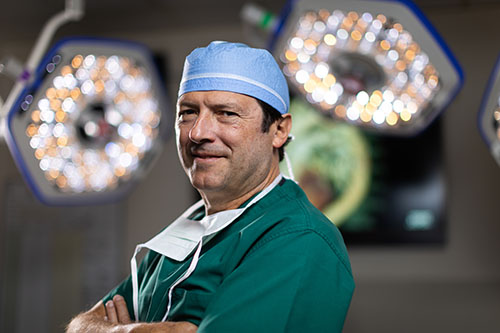
For some appropriately selected patients, the Ross procedure is an option. Because it uses the patient’s own living tissue as the replacement aortic valve, the Ross procedure offers characteristics that may be attractive to some younger adults. UHealth—University of Miami Health System’s Comprehensive Aortic Center is the only program in South Florida to offer the Ross procedure.
Under the leadership of Juan Umaña, M.D., chief of cardiothoracic surgery at UHealth—University of Miami Health System, UHealth’s Comprehensive Aortic Center provides a dedicated, multidisciplinary approach to the diagnosis, surveillance and treatment of complex aortic disease.
Specialists in cardiothoracic surgery, vascular surgery, cardiology, cardiovascular imaging, cardiac anesthesia, genetics and critical care work collaboratively through a coordinated care pathway to evaluate each patient’s individual needs and determine the most appropriate treatment strategy.
The Benefits of the Ross Procedure
For appropriately selected patients, the Ross procedure offers several potential advantages. Your surgeon will discuss these potential benefits in the context of your individual condition.
Potential advantages can include:
- Living tissue that functions similarly to a natural aortic valve
- Excellent blood flow through the replacement aortic valve
- Avoidance of the lifelong anticoagulation medication often required after mechanical aortic valve replacement
- The potential for the pulmonary autograft to grow in children and younger patients
How the Ross procedure works
The Ross procedure takes an unusual approach. Instead of replacing the diseased aortic valve with an artificial valve, surgeons move the patient’s own healthy pulmonary valve into the aortic position. A donor valve is then used to replace the pulmonary valve.
It is a complex operation and not appropriate for everyone. But for viable candidates, it can be an appealing option.
“Younger patients often want to understand how today’s valve decision could affect their future lifestyle, family plans and potential need for additional procedures,” says UHealth cardiothoracic surgeon, Ciro Amodio, M.D., co-director of the Comprehensive Aortic Center.
Why the long view matters
For a 25-, 35- or 45-year-old, an aortic valve replacement is potentially a lifelong decision. The valve that works well today may need to be considered again years down the road.
That makes factors beyond the operating room important.
Younger adults may want to remain physically active, avoid or minimize long-term medications, or reduce the likelihood of repeated valve procedures. Women who may become pregnant also have additional considerations when choosing a valve strategy, particularly because mechanical valves require anticoagulation.
“There is no one-size-fits-all valve choice. The right option depends on the patient’s anatomy, goals and how they weigh long-term considerations,” says Dr. Umaña. “At the Comprehensive Aortic Center, we evaluate each patient to develop a customized treatment plan.”
The Ross procedure does not eliminate the possibility of future valve problems or procedures. It also carries its own risks and considerations. The right choice depends on the individual patient rather than age alone.
Who might be a candidate?

Determining whether the Ross procedure is appropriate requires a detailed evaluation. Doctors consider the patient’s valve anatomy, overall health, age, other heart conditions and long-term goals.
The Ross procedure can be considered for children, young adults and other carefully selected patients who need aortic valve replacement. It is well suited for younger patients because living heart tissue adapts and grows with the patient. Typically, a patient may be considered a candidate for the Ross procedure if they are younger than 60.
The procedure involves two heart valves rather than one, so experience matters. A team with expertise in complex aortic valve disease can help patients understand not only whether the procedure is technically possible, but how its potential benefits and risks compare with other options.
Looking beyond the valve
For younger adults, successful valve treatment means more than getting through surgery. It is about returning to a life that may include careers, family, travel, exercise and other goals.
“Our conversations are rarely just about the operation itself. Patients want to know how treatment may affect the life they hope to live afterward,” says Dr. Amodio.
Connect with UHealth’s Comprehensive Aortic Center
To learn more about UHealth’s Comprehensive Aortic Center, call 305-4-AORTIC (267842) or request an appointment online.
Learn More or Request an AppointmentMedically reviewed by Juan Umaña, M.D. and Ciro Amodio, M.D.
Tags: aortic valve repair, aortic valve replacement, bicuspid valve, cardiothoracic surgeon, Comprehensive Aortic Center, Dr. Juan Pablo Umaña, focusing on you, Ross procedure

