
CTE: The Hidden Brain Risks Beyond Football
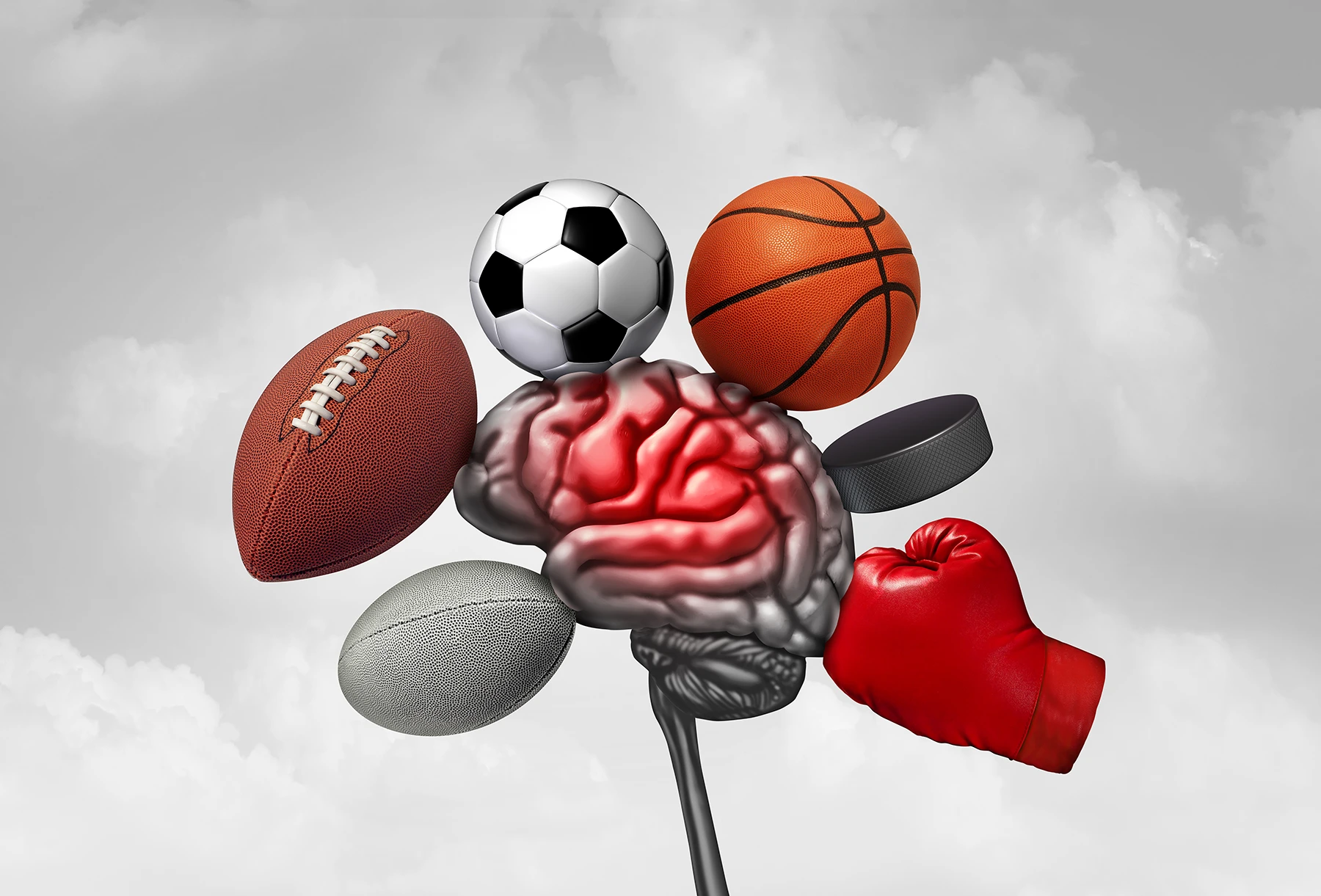
Due to widespread media coverage, many people commonly associate chronic traumatic encephalopathy (CTE) exclusively with professional football players. However, they are not the only individuals at risk for this condition. Athletes involved in various contact sports, such as soccer, hockey, boxing, and mixed martial arts, are also vulnerable, as their participation can lead to concussions or repeated sub-concussive impacts to the head.
This is why both youth and professional contact sports are now adopting new helmets, updated rules, and enhanced safety protocols aimed at safeguarding players’ heads and necks from impact. However, it’s important to note that repeated head trauma — whether from athletic events, combat situations, domestic violence, or car accidents — can significantly increase the risk of developing CTE.
What are the symptoms of CTE?
CTE is not an official diagnosis. It’s not genetic nor contagious. Rather, CTE is a form of dementia marked by a collection of symptoms that may develop a few years after injury to the brain.
These symptoms include:
- memory loss
- confusion
- impaired judgment
- changes in behavior (including aggression/violence and/or erratic behavior)
- mood swings (including depression, anxiety, anger, and/or paranoia)
- problems with movement and coordination
- increased risk of suicidal ideation or attempts
CTE can worsen over time. As the symptoms advance over years or decades, the condition can lead to complications in its final stages, such as the inability to perform essential life functions like feeding and bathing. CTE can result in a weakened immune system, increasing the risk of fatal infections.
“In persons who are presumed to have CTE, there are often a number of characteristics of other neurological diseases, such as Parkinson’s disease,” says Doug Johnson-Greene, Ph.D., M.P.H., ABPP, a neuropsychologist with the University of Miami Health System. “It’s not clear if CTE is a distinct clinical entity.
“A highly similar, and perhaps identical disorder, pugilistic Parkinsonism, was described as early as the 1940s among professional boxers,” he says. “In these cases, what is known is that there’s a higher deposition of the brain protein p-tau, which is seen in many neurodegenerative disorders, including Alzheimer’s disease.”
How head trauma causes CTE
Repeated impact to the head, neck, and back may cause damage to your brain. Experts beileve that repeated damage leads to a breakdown and buildup of p-tau (tau protein) in the brain. Normally, p-tau helps stabilize microtubules in neurons. But when it accumulates, it creates tangles that cluster around blood vessels and spread throughout the brain, disrupting neuronal function.
The abnormal buildup of p-tau also triggers a chronic inflammatory response in the brain called immunoexcitotoxicity, leading to persistent inflammation and tissue damage. This process causes further neuronal dysfunction and brain cell death.
If progression occurs, abnormal p-tau buildup spreads from the initially affected areas in the brain’s cortex to other regions, causing widespread brain cell atrophy and dysfunction. In some cases, other proteins also collect, further compounding the brain damage.
This brain damage is often suspected in patients with a history of trauma to the head combined with the symptoms of CTE. It can be confirmed only after death by examining their brain tissue.
“Concussions are a complex topic.”
Dr. Johnson-Greene says. “Being knocked unconscious is not necessary for a concussion (using our current definitions). All concussions fall under the category of ‘mild head injury.’ The definition of a concussion is any blow to the head that causes at least one neurological symptom.
“Unfortunately, the blow to the head and the associated neurological symptoms are all based on self-report,” he says, “and people are not accurate reporters of events like this nor of their own symptoms.”
“More severe blows to the head can be potentially more problematic, especially if adequate time for recovery between concussions did not occur. Most significant concussions are associated with a period of unconsciousness for at least a few minutes and up to 30 minutes. But, repeated concussions, especially those that do not allow adequate time for recovery before another occurs, are one of the hypothesized mechanisms for CTE,” he says.
The brain can easily withstand most activities.
CTE has been studied most often in football players because they tend to have concussions, many of them qualify to participate in research studies, and they are often interested in advancing athletes’ safety and minimizing their risk of traumatic brain injury.
“But, contact sports are generally safe,” Dr. Johnson-Greene says. “The general consensus in the medical community is that the benefits of regular exercise through contact sports (below the collegiate level or other modalities) outweigh the risks. It is far more likely to have problems with cardiovascular disease during one’s lifetime, and the actual risk of developing CTE appears to be very small.”
Helping those with CTE
If you sustain an injury to the head or suspect you have had a concussion, seek medical attention. A neurologist can test certain cognitive functions and may recommend a period of mental and physical rest to protect your brain from further injury and support healing.
Currently, there is no cure for CTE, but some of its symptoms can be managed with various therapies and medications. Many patients with CTE benefit from multidisciplinary care including a combination of treatment approaches.
Cognitive and behavioral therapies
- Cognitive behavioral therapy (for mood swings, depression, and anxiety)
- Cognitive support therapies
- Memory training exercises
Medications
Examples: antidepressants, mood stabilizers, and sleep aids
- Used to temporarily treat depression, anxiety, sleep disturbances, and headaches
- Cannot cure CTE nor reverse its progression
Physical and occupational therapies
- Physical therapy addresses movement and balance problems
- Occupational therapy teaches new techniques for completing daily tasks
Lifestyle changes
- Regular physical activity, such as aerobic exercise, strength training, and yoga
- Get adequate sleep
- Maintain a non-inflammatory diet
Written by Dana Kantrowitz.
Tags: Chronic brain injury, Dr. Doug Johnson-Greene, Head trauma prevention, Neurological symptoms

