
Team‑Based Care Makes All the Difference in Multiple Myeloma
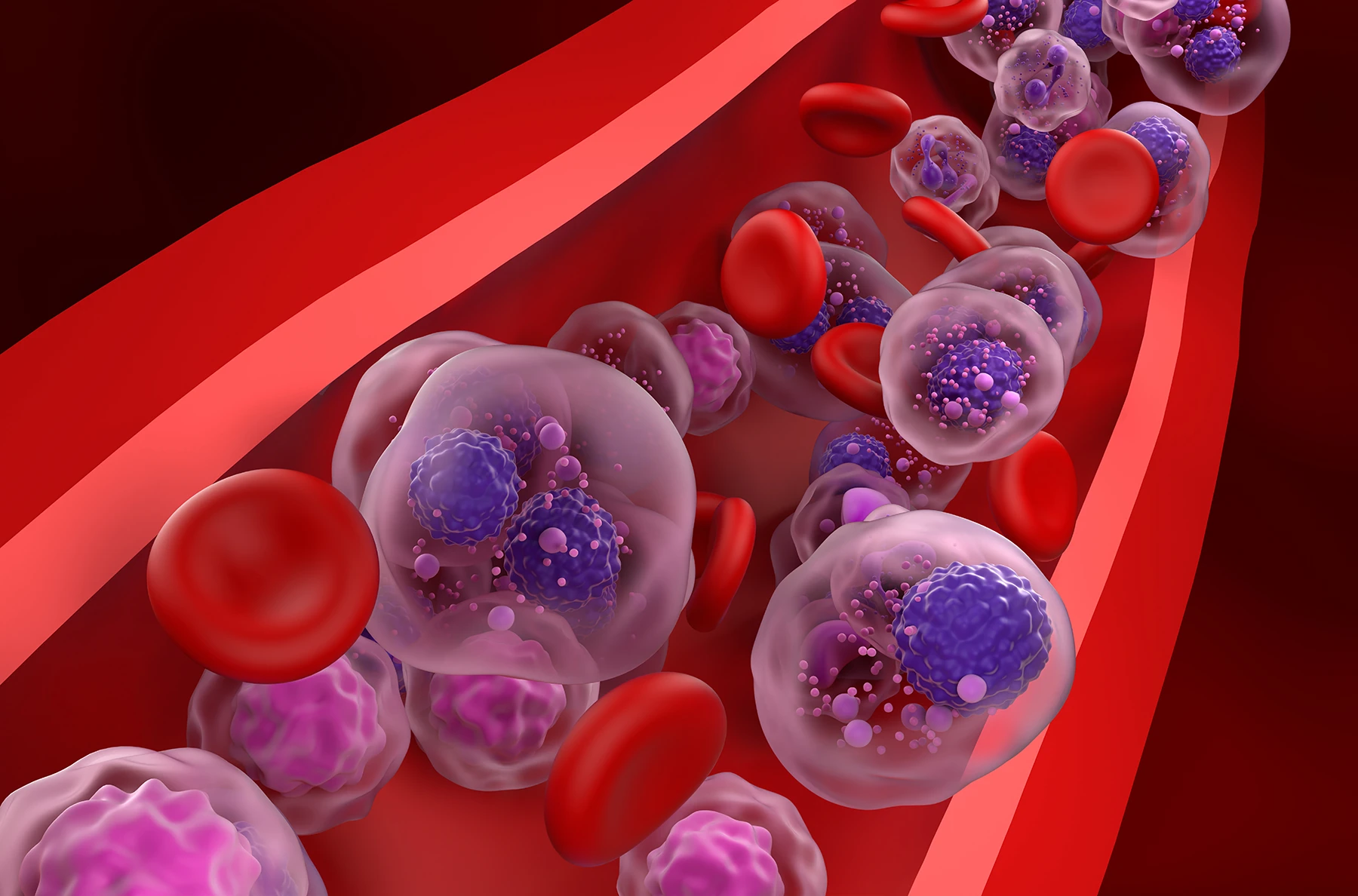
The second most-common blood cancer, multiple myeloma is a cancer of plasma cells — part of the immune system — and it often behaves differently from many other cancers. Instead of following a single treatment path, multiple myeloma tends to change over time. Treatments may stop working and need adjustment, and patients often move through periods of remission and relapse — requiring ongoing decisions about when to start treatment, how aggressive it should be and how to manage side effects.
“Multiple myeloma has certain complexities that really require a comprehensive approach to patient care — it’s critical to have a team,” says Damian Green, M.D., an expert in advanced immunotherapy for multiple myeloma and chief of the Division of Transplantation and Cellular Therapy at Sylvester Comprehensive Cancer Center, part of UHealth – University of Miami Health System. “Managing this disease,” he adds, “requires physicians from a variety of specialties, as well as experts to help manage side effects of the various therapies and complications of the disease itself.”
What collaborative care means for multiple myeloma patients
A multiple myeloma patient may see several different specialists over the course of their care, sometimes simultaneously.
“This is a disease you that requires systemic therapy and coordinated decisions over time, based on how the cancer and the patient evolve,” says C. Ola Landgren, M.D., Ph.D., director of Sylvester Myeloma Institute and chief of Sylvester’s Division of Myeloma. “That’s why Sylvester Myeloma Institute brings together physicians, nurse practitioners, nurses, pharmacists and other experts, and works very closely with Sylvester’s cell therapy and transplantation division.”
A collaborative myeloma team may include:
- A medical oncologist who coordinates long-term treatment and serves as the hub for all care
- Transplant and cellular therapy specialists
- Infectious disease specialists to help prevent and treat infections
- Nutritional support to help optimize the benefits of therapy, counter side effects and improve quality of life
- An orthopedic surgeon or endocrinologist if issues with bone density arise
- A clinical trial coordinator
- Nurses and support teams
Amer Beitinjaneh, M.D., M.P.H., a professor of medicine who leads Sylvester’s Transplant, Cellular and Viral Therapy Site Disease Group, works closely with Dr. Landgren and Dr. Green. “Multiple myeloma patients go back and forth between different types of treatment,” he explains. “There is no linear progression, and all the specialists need to communicate constantly.”
To understand how their care team works together, patients may want to ask questions such as:
- Who is helping coordinate my overall care?
- How do my specialists communicate with each other?
- What options might I need to consider later, even if not now?
New multiple myeloma treatment options require more teamwork
Two decades ago, only three drugs were approved by the FDA to treat multiple myeloma. Today, there are nearly 30.
“Multiple myeloma treatments have evolved, and the majority of our patients are now treated with immunotherapy-based and small-molecule approaches from their initial diagnosis,” Dr. Landgren says. “Cellular therapies are also entering the picture earlier. All these approaches tend to require more complicated treatment plans.”
For example, one large trial showed that adding a fourth drug to a standard treatment combination helped more patients reach very low or undetectable levels of cancer cells, also referred to as minimal residual disease (MRD) negativity. But it also increased the need to monitor treatment side effects and adjust drug doses.
However, not everyone benefits from the same approach, and not every patient is a candidate for the most aggressive therapy. “It’s very complex, and it can be challenging to decide in which order to give these treatments to offer the most benefit to patients — including longevity and the fewest complications,” Dr. Beitinjaneh says. “Patients may be referred for evaluation or even stem cell collection well before they actually need a transplant or cellular therapy.”
Newer treatments also mean that individuals diagnosed with multiple myeloma are living longer. “When I was in fellowship, lifespan for individuals with multiple myeloma was two, maybe three years. Now, patients can have more than 20 years of survivorship,” Dr. Landgren says. “In fact, many patients will live as long as an individual of the same age and gender without multiple myeloma. With patients living longer, we need to make sure we avoid unnecessary long-term side effects from the therapies we use. We need to work together to give patients the best possible quality of life.”
The role of CAR T‑cell therapy
A growing number of patients with multiple myeloma are becoming candidates for CAR T cell therapy (short for chimeric antigen receptor therapy), a cellular therapy that uses a patient’s own immune cells to fight cancer. Immune cells are collected, modified to recognize cancer cells, and then returned to the body, where they multiply and attack the disease. “CAR T cell therapy has revolutionized multiple myeloma treatment,” says Green. “We now have one-third of patients who are off all treatment for five years after receiving a single CAR T infusion—this is unprecedented—and better CARs are coming.”
CAR T treatment takes close collaboration across the care team. “CAR T therapy requires careful coordination before, during and after treatment,” Dr. Green says. “That includes monitoring for side effects and following patients closely over time.”
Clinical trials offer new approaches for multiple myeloma
During the past two decades, research has transformed how multiple myeloma is treated, and clinical trials remain central to that progress.
“Multiple myeloma has been at the forefront of cancer research for many years, and we keep pushing toward the goal of defining curative treatments,” Dr. Landgren says. “At Sylvester, we have many open clinical trials for multiple myeloma, so we’re able to offer additional, leading-edge treatments.”
Sylvester is one of a select group of specialized centers in the U.S. approved to conduct the most advanced transplant and cell therapy trials — designated as a Blood and Marrow Transplant Clinical Trials Network Core Center.
“As a core center, we have access to more complex clinical trials, including for multiple myeloma,” Dr. Beitinjaneh says. “These are therapies that require specialized labs, clinical infrastructure and inpatient units.”
Communication, coordination, and continuity
Multiple myeloma is a disease that changes, and care must change with it. Collaborative care is about communication, coordination and continuity.
For patients, that teamwork can mean clearer decisions, safer treatment transitions and better support over the long term — all of which matter just as much as the therapies themselves.
Sylvester Comprehensive Cancer Center offers multiple myeloma care — including the ongoing care of transplant therapy recipients — at locations across South Florida, including its newest UHealth SoLé Mia in North Miami. To learn more about treatment options, talk with your cancer specialist, or visit the Sylvester Myeloma Institute.
Written by Rochelle Broder Singer.
Tags: Dr. Damian Green, Dr. Ola Landgren, integrated cancer care approach, managing complex blood cancers, multidisciplinary cancer care team, Sylvester Comprehensive Cancer Center

