From Science Fiction to Routine: Reflecting on a Lifetime of Modern Medicine
In 2026, the Baby Boomers begin to turn 80. As they approach their older senior years, it’s no exaggeration to claim modern medicine has, in many ways, shaped this generation. Unlike their ancestors, Boomers are the first generation as a whole to fully benefit from modern healthcare throughout their lifespan.
From the polio vaccine to pacemakers, organ transplants and immunotherapy, this generation of seniors is the first to reach old age with the expectation of living long, healthy lives.
Boomers are the first generation to age in an era where:
- Living to 80 is common
- Dementia is recognized as a public health issue
- Fall prevention, frailty screening and cognitive assessments are routine
- Medicine is more curative than palliative
As Boomers reach their later years, the focus on longevity and the newer specialty of geriatrics have ushered in a profound cultural shift in healthcare for aging. Today’s approach to medicine is focused on optimizing quality of life in the later decades significantly more than in the past.
In honor of this milestone birthday for Boomers, two UHealth clinicians who have seen firsthand how medicine has evolved over their careers reflect on some of the most dramatic changes.
Solving the impossible
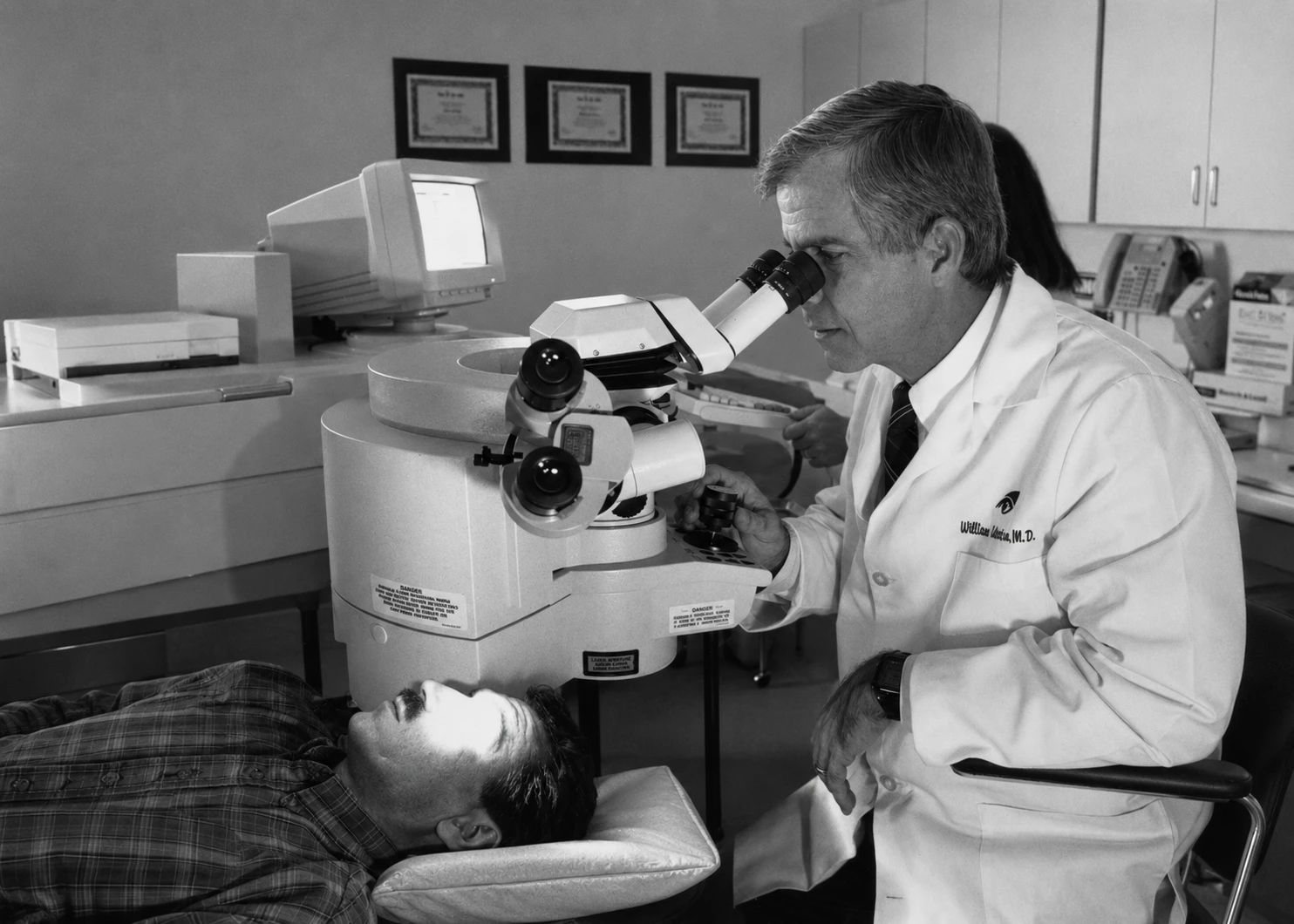
William Culbertson, M.D., ophthalmologist and medical director of Bascom Palmer’s Cornea Division and the LASIK and Laser Vision Center, recalls a childhood where Miami pools were frequently closed during summer polio outbreaks, rheumatic fever was prevalent and antibiotic options were limited. “The biggest change is that we used to have to just observe disease processes, but with the availability of antibiotics in our lifetime, we have the general ability to do more for people,” he says.
Today, Dr. Culbertson practices medicine in an era with innovations that seemed like science fiction when he was in medical school.
“Now you have stents, bypass grafts, laser-guided surgery, X-rays at low radiation, computed imaging and laser treatment. Things that once seemed impossible became diagnosable and curable,” he says.
In ophthalmology, Dr. Culbertson’s research career has spanned and contributed to some of the miracles of modern-day medicine.
For example, in macular holes, a hole can develop in the center of the retina, leading to legal blindness in a matter of weeks.
“When doctors started doing operations that cured macular holes, nobody could believe it. Now it’s routine surgery,” he says.
A significant evolution in Dr. Culbertson’s specialty of the cornea was the advent of intraocular lenses for cataract surgery. Before that, doctors would remove patients’ cloudy cataract lenses, leaving them to wear thick cataract glasses. “The advent of intraocular lenses, which could be inserted through a small 2.0mm self-sealing incision into the eye after you took out the cataract, was a tremendous improvement,” he says.
Dr. Culbertson helped develop lasers to improve precision in cataract and LASIK surgeries.
Some of the earliest LASIK surgeries were offered at UHealth, and researchers at Miller School of Medicine were involved in developing laser techniques to correct nearsightedness, astigmatism and farsightedness in younger people. “Now we can treat both younger and older people. When I started in ophthalmology, things like this were only a dream,” he says.
Several techniques developed at Bascom Palmer Eye Institute, including ones that improved the repair of macular holes and cataracts, have contributed to innovations in modern medicine that have improved the quality of life for the Boomer generation. “People now don’t just wait to go blind; they get treated, often resulting in better vision than they ever had before,” says Dr. Culbertson.
For those who might be inclined to take modern medicine for granted, Dr. Culbertson has a lifetime of experience testifying otherwise. “Today, we have the philosophy that you don’t take impossible for an answer. Things that seemed unlikely or impossible are now feasible and even routine. Yesterday’s miracles are now routine.”
More human-centered medicine for patients and colleagues alike
Annabelle Scott, DNP, APRN, senior manager of nursing and clinical education, was recruited as a young nurse to work in the United States from the Philippines in the early 1980s and leaped at the chance to grow in her profession. Recruiting companies sought nurses from abroad to meet the nursing shortage in the U.S. Nurses, who were nearly all women, were leaving the workforce in droves due to burnout and to raise children.
The nursing culture in those days was markedly different, says Scott. “There was such a sense of seniority, and if you are new, there was a known rule that nurses eat their young,” she says.
Scott recalls many tears and a lack of teamwork.
“Today, we nurture new nurses. We know about burnout, and nurses can easily say when they feel too much pressure,” she says.
Beyond just electronic medical records, the integration of computation into medicine was among the most significant turning points.
When the Baby Boomers were young, computers filled entire rooms and had no role in patient care.
Diagnoses were made with a stethoscope, a microscope and a physician’s clinical intuition.
Today, computation is embedded in nearly every aspect of medicine — from how diseases are detected to how treatments are delivered. “There were no computers, so I remember spending a lot of time writing in charts, and there were papers everywhere,” she says.
For Scott, her daily nursing practice significantly differs from her earlier career days. “When I started, there wasn’t even an ambulatory setting,” she says. Everyone was inpatient, even for minor procedures.
Scott recalls patients staying for multiple days for cataract surgery. Patients were admitted a few days before the surgery for blood draws and screenings. Post surgery, they’d recover for days in bed. “When it was time for them to leave, many didn’t want to go home, because it was like a vacation for them,” she jokes.
Scott appreciated the ability to develop a strong rapport with patients, but acknowledges most people benefit from returning home right away after minor outpatient procedures.
Today, Scott has recognized significant progress in the role of nursing within a care team.
Unlike her early years, nurses today are encouraged to practice at the top of their license. It’s not uncommon for physicians to now ask nurses on the team for input on a patient’s condition. “The beauty of being in this profession a long time is I’ve seen the transition of the nurse’s role and the value given to our profession now. We’ve come a long way from where we weren’t asked to contribute to the body of knowledge,” she says.
As for patient care, Scott has seen it evolve from a more passive model to one grounded in evidence and early intervention.
Decades ago, it was common to keep patients on extended bed rest, under the belief that immobility promoted healing.
Research has since shown the opposite, even after major procedures such as open-heart surgery. “The quicker you get that patient out of bed, the quicker the recovery,” says Scott.
Clinical teams prioritize early mobility by using pain management, guided movement and breathing exercises to help patients regain strength sooner. The shift reflects a broader transformation in medicine from waiting until patients are “ready” to act to actively engaging them in recovery.
No matter how severely ill a patient may be, today’s approach to care is more focused on finding a cure, especially at Sylvester Comprehensive Cancer Center, where Scott now works. “When you are in a place that’s involved in research, there’s always something a patient can look forward to, especially in our specialty here in oncology. I’ve never seen a facility so focused on finding the cure,” she says.
As medicine enters a new era defined by robotics, artificial intelligence and precision technology, the most essential element remains unchanged.
The human connection at the heart of care, says Scott. “These technologies are important in helping us take care of patients, but we should never forget what it is to have human interaction, compassion and empathy for our patients and for each other,” she says.
For the Baby Boomers, a generation that has benefited from medicine’s most dramatic advances, that balance between innovation and humanity is a lesson worth passing on to future generations.
Written by Wendy Margolin.
Tags: Annabelle Scott, Dr. William W. Culbertson, geriatrics and aging, healthcare innovations

