
Why More Adults Are Developing Allergies Later in Life
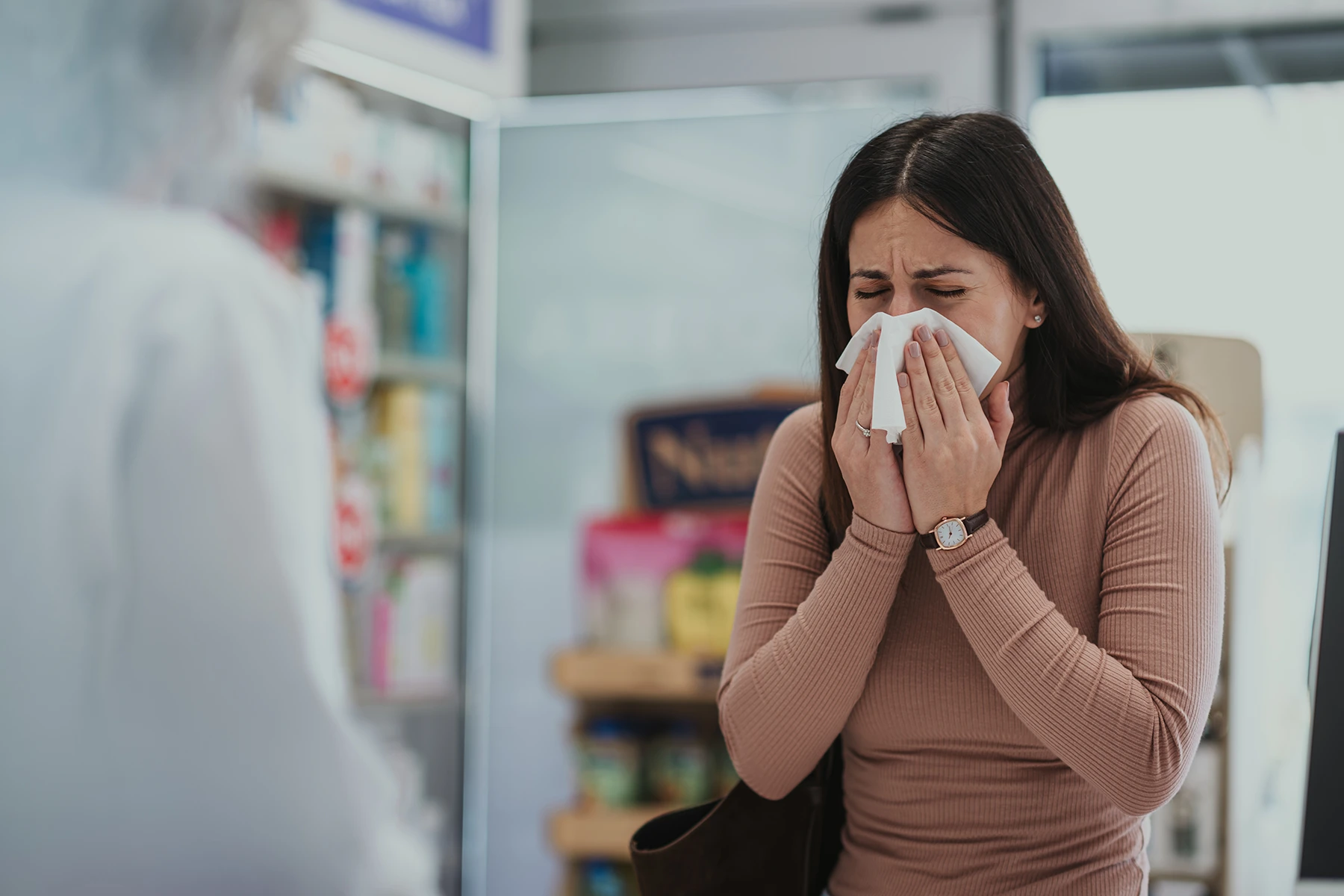
Adult-onset allergies are becoming more common as climate change, pollution, and indoor allergens increase. A UHealth ENT specialist explains why symptoms can appear later in life and how to manage them.
If you’ve noticed more people sneezing and snuffling, your perception is spot on. Adult-onset allergy cases have been rising for years as our environment changes and the foods we eat are increasingly treated with more chemicals.
Reports show that the uptick has been steady over the years. The Centers for Disease Control and Prevention’s National Health Interview Survey (NHIS) found that the number of adults with at least one diagnosed allergy was 31.7% in 2024.
About 20 years earlier, the prevalence, especially for food and skin (eczema) allergies, was estimated to be lower — at about 15% to 20% of adults reported at least one allergy.
Aura Acosta, M.D., an otolaryngologist with the University of Miami Health System, sees plenty of adults who come to her to figure out why their noses are running and their eyes are itching more than ever before. “I’m clearly seeing this trend in clinic,” she says. “Just yesterday, five of my 15 patients were adults who hadn’t previously had any [allergic] symptoms.”
The rise in adult allergies is happening in other countries, too.
The European Academy of Allergy and Clinical Immunology (EAACI) advocacy manifesto reported allergy prevalence has been rising significantly in adults across multiple European countries, with rates varying from one nation to another but sharing a commonality in their increases.
Receiving the diagnosis can be confounding for adults.
Most of Dr. Acosta’s patients who develop a respiratory allergy in adulthood are convinced that a sinus infection is to blame for their symptoms. “They think allergies are something that happens to people in childhood and that some people eventually outgrow it,” she adds. “They don’t think it can happen to them in adulthood.”
They’re also surprised by the treatment.
Allergies are a chronic condition, and there is no one-and-done treatment. There is no magic bullet cure. Part of her job, she says, is to educate her patients about the causes and proper management of their condition.
Adults develop allergies when the immune system begins to respond differently to environmental triggers. In other words, they may have spent decades exposed to a trigger (pollen, food or even pet dander) without ever experiencing a reaction. But when the body reaches a tipping point, it starts to treat what was once a harmless substance as a threat to its existence.
“There’s a cumulative environmental exposure that happens over time,” she says. “It gets to a point when our immune system becomes more reactive when it encounters the particular trigger.”
Seasonal allergies are the most common.
One-quarter of adults reporting having the condition, according to the CDC data brief. Almost 8% had eczema, and 6.7% had a food allergy. Many have more than one allergy, too. What’s more, prevalence varies according to gender, race and geography. Diagnosed food allergies, for example, were more prevalent in Black non-Hispanic adults (9.9%) compared with Hispanic (5.4%), Asian non-Hispanic (5.5%), and White non-Hispanic (6.4%) adults.
Experts believe more adults are developing allergies because of environmental factors and lifestyle choices. In other words, climate change and pollution are the strongest documented contributors to the trend.
“Climate change,” Dr. Acosta explains, “is not a political thing. It’s real and it affects us in many ways.”
As our world grows warmer, the pollen season lengthens and the concentration of pollen in the air increases. In addition, climate change leads to extreme weather events, such as wildfires and dust storms, which, in turn, increase allergens and pollutants. Stating that “human health and planetary health are connected,” one 2023 study published in the Annals of Allergy, Asthma & Immunology predicted that more extreme weather events would increase allergic diseases around the world, “exacerbating the already high health care burden associated with these diseases.”
Recent pollen counts in Florida have been unusually high.
This has been driven by warm, dry, windy weather. Dry soil and little rain allow pollen to stick around longer. Oak, juniper, pine, and grasses were the main contributors.
But it’s not just the great (and changing) outdoors that can affect our body’s immune system. As we spend more time indoors, we are increasingly exposed to dust mites, pet dander, mold, cockroaches, and rodent allergens, speeding up the pace in which we reach our “allergy threshold.”
Women, in general, are more likely than men to experience allergic conditions.
Though more boys than girls have seasonal allergies, puberty flips those numbers. “That’s when hormones kick in,” Dr. Acosta explains. “Estrogen leads the immune system to become more active, while testosterone appears to be protective against allergies.”
Hormone fluctuations also influence a woman’s immune reaction. One recent study published in Frontiers in Allergy concluded that menopause worsened allergic rhinitis, increased asthma risk and prompted drug hypersensitivity in women ages 55 years and older.
Though allergies can be annoying (and sometimes dangerous), Dr. Acosta offers hope. “We have good tools to manage it,” she says.
Her suggestions:
- See a specialist for proper diagnosis. A skin or blood allergy test will reveal sensitivities and serve as a guide, but only a clinical history can point to what actually triggers your immune system’s overreaction. (In short, not everyone who shows a “positive” on a test will develop into a full-blown allergic reaction.) “It’s very important to narrow down what causes the symptoms,” she adds.
- Avoid the allergy trigger. “Your life will have to change,” Dr. Acosta says. “Avoidance is the most important thing to do.” People who are allergic to pollen should shed their clothes at the door and shower so they don’t introduce the allergen inside. Those with allergies to pet dander need to keep their dog or cat out of their bedroom.
- Try medication — nasal spray or pills — if avoidance is not enough. If your symptoms occur only during certain times, your use of medications will be limited to that season. However, “we’re seeing more indoor allergies and those [patients] have to take their meds every day.”
- Consider allergy shots (or allergen immunotherapy) as the “hope for the cure.” Shots gradually expose the immune system to increasing amounts of an allergen, which eventually makes the body less reactive. They are indicated for people who can’t effectively control the symptoms when avoidance and medical management fail. “We have good evidence that immunotherapy, either shots or sublingual immunotherapy, can work effectively in treating allergic disease or even preventing comorbid conditions in some cases,” Dr. Acosta says.
Written by Ana Veciana-Suarez. Reviewed by Aura Acosta, M.D.
Sources
https://www.cdc.gov/nchs/products/databriefs/db545.htm
https://eaaci.org/wp-content/uploads/2024/02/EAACI_Advocacy_Manifesto.pdf
https://www.frontiersin.org/journals/allergy/articles/10.3389/falgy.2026.1777688/full
Tags: adult-onset allergies, allergic rhinitis, otolaryngology in Miami, pollen allergies

