
Beyond Cancer: The Power of Emotional Support
“I felt lost. I was listening to the doctors, but I couldn’t fully process what was happening.”
[SPANISH VERSION]
This is how Tania Luna, 50, described the moment she received her diagnosis of liposarcoma, a rare type of soft tissue cancer.
At first, Tania went to the emergency room several times seeking answers for her severe abdominal pain, but no clear cause was identified. Imaging tests eventually revealed a large tumor, and the diagnosis was advanced liposarcoma. “I was in shock. I didn’t understand what was happening,” Luna recalls.
Like many cancer patients, she had to face not only the disease and its treatments, but also the fear, uncertainty, and stress that often accompany a cancer diagnosis.
After confirming the diagnosis, she began chemotherapy treatment at Sylvester Comprehensive Cancer Center, a process she described as extremely difficult both physically and emotionally.
During her first cycle, she experienced profound exhaustion. “I felt weak, without strength. I lost all my strength and my essence,” Tania says. It was at that moment that she fully understood the severity of the illness and the impact it would have on her life.
Tania’s experience reflects a reality that thousands of cancer patients face. Stress associated with the disease is not simply an emotional reaction. Increasing research shows that chronic stress can influence physical health, quality of life, exacerbate symptoms of fatigue and depression, and even impact biological processes related to cancer.
According to Dr. Frank Penedo, PhD., director of the Sylvester Survivorship and Supportive Care Institute, stress associated with a cancer diagnosis is often persistent. Concerns about treatment, side effects, the possibility of recurrence, and changes in daily life can create a significant emotional burden.
Dr. Penedo notes that chronic stress can influence biological processes that affect both healthy and cancerous cells. He also explains that this type of sustained stress may accelerate processes associated with biological aging, and increase symptoms of pain, fatigue and depressed mood. However, Sylvester’s research has shown that learning how to manage stress can help reduce these effects and improve overall well-being.
“This gives us an opportunity as clinical health psychologists and behavioral medicine researchers to develop techniques that help survivors manage stress and avoid its negative consequences,” Dr. Penedo says.
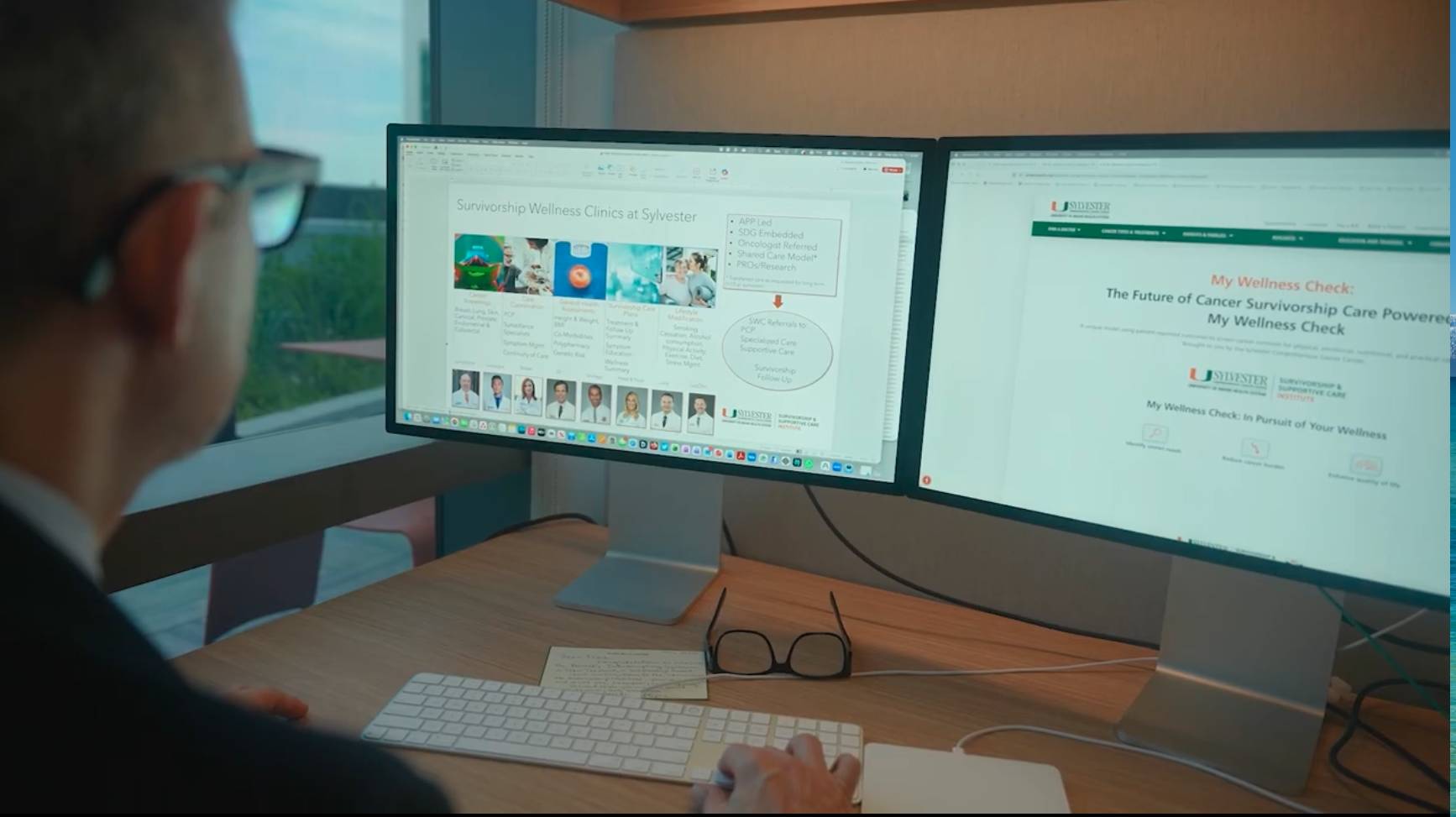
To help patients face these challenges, the Institute offers a wide range of services designed to address the physical, emotional, and social needs of patients and their families. These include psychotherapy, art therapy, music therapy, acupuncture, therapeutic massage, exercise, and nutrition counseling.
During her treatment, Tania found support in several of these initiatives, especially Believe in You, a program that combines exercise, education, and emotional support.
In addition to participating in this program, Tania took advantage of multiple support resources, including attending virtual exercise sessions twice a week, practicing yoga and meditation, and receiving music therapy and therapeutic massages. These activities not only contributed to her physical recovery but also helped her manage stress, reduce anxiety, and regain confidence in herself.
“They helped me so much. I felt depressed, without hope. Finding a community of people going through similar experiences helped me move forward,” she says.
In addition to in-person support, Sylvester is developing new artificial intelligence-based digital platforms that provide patients with personalized, real-time support. These tools can monitor physical and emotional symptoms and offer resources to help manage stress whenever patients need them, as a complement and extension to in-person clinical care.
These platforms are highly controlled systems based on ongoing clinical research. Their goal is to offer greater precision and patient autonomy, allowing individuals to access stress-management techniques and emotional support anytime and anywhere—at home or at work.
“Cancer can make a person feel like they have lost control over many aspects of their life. Our goal is to help them regain it,” Dr. Penedo says.
Today, one year after her diagnosis and now cancer-free, Tania says the Institute’s programs transformed her experience as a patient.
“They helped me come out of that place of sadness I was in,” Tania says “Now I have more optimism, a better quality of life, and more desire to live. I learned that there is always a tomorrow.”
The Institute will host a symposium in Miami on October 29 and 30. The event will bring together cancer survivors, caregivers, researchers, and healthcare professionals to share the latest advances in research, supportive care, and strategies to improve the quality of life for individuals affected by cancer.
For more information and to register, please visit:
https://umiamihealth.org/en/sylvester-comprehensive-cancer-center/research/survivorship-research-at-sylvester/sylvester-cancer-survivorship-symposium.
Article and video written and produced by Shirley Ravachi for “Cuidando Su Salud,” a series of healthcare-related stories that regularly air on Telemundo 51. For more stories like this, visit the YouTube channel of Sylvester Comprehensive Cancer Center.
Tags: CancerSurvivorship, Copilot said: DrFrankPenedo, DrFrankPenedo, PatientSupport, SurvivorshipCare, SylvesterCancer, SylvesterCancerCenter

