
Can You Reverse Fatty Pancreas Disease? What You Should Know
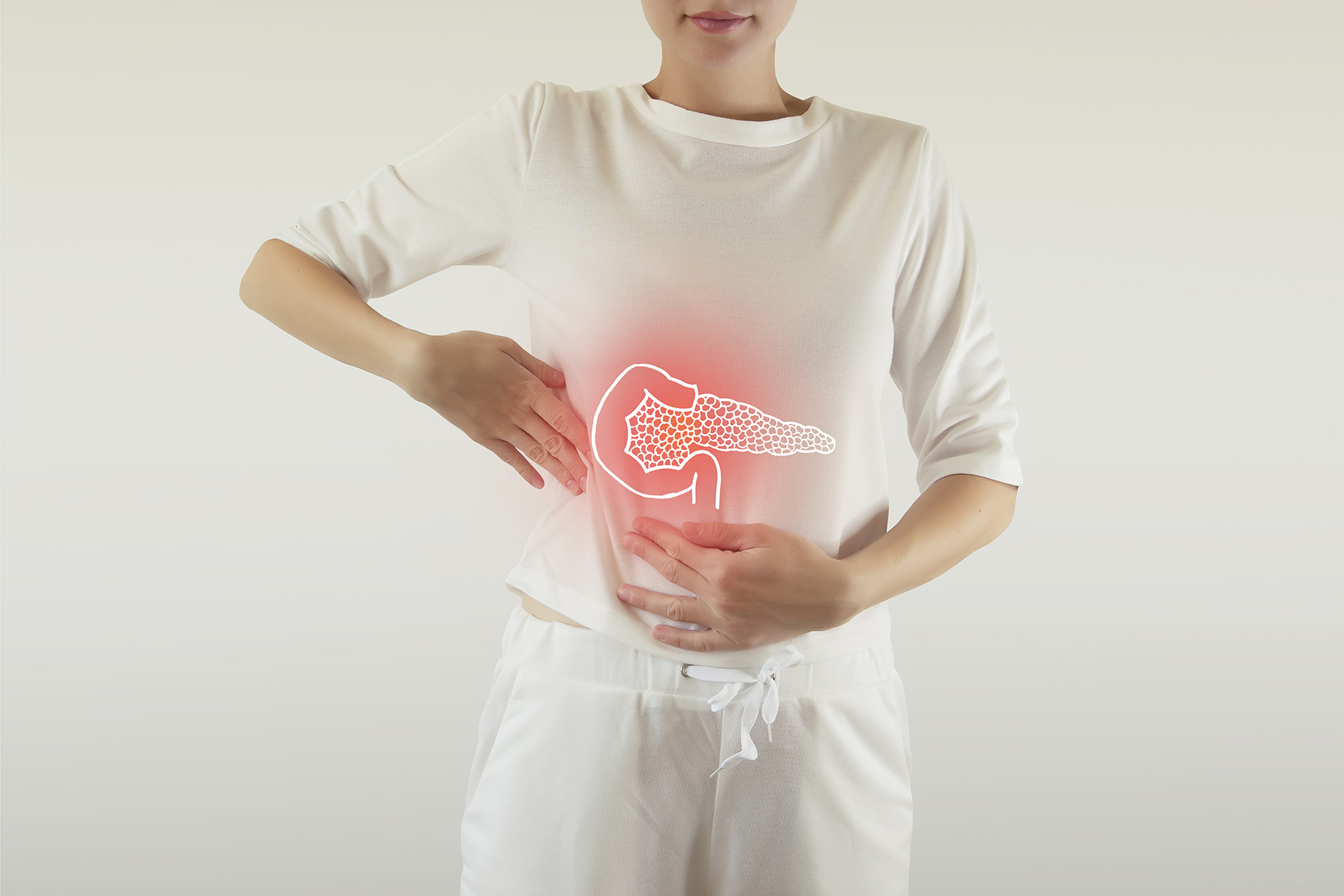
Fatty pancreas disease often develops without symptoms, but it may signal serious health risks, including type 2 diabetes and pancreatic cancer. A UHealth expert explains what causes fat to accumulate in the pancreas and how lifestyle changes may help reverse it.
Everyone has heard of fatty liver disease. But fatty pancreas disease, not so much.
Yet, it’s one of the more common pathologies affecting the pancreas.
Medically known as intrapancreatic fat deposition (IPFD), it’s also more common than the combined prevalence of pancreatic cancer and pancreatitis.
“We hear about fatty liver disease all the time,” says Field Willingham, M.D., M.P.H., a gastroenterologist at the University of Miami Health System, as well as chief of the Division of Digestive Health and Liver Diseases and the Kenneth C. Griffin Endowed Chair of Gastroenterology, at the Miller School of Medicine, “but we joke that fatty pancreas disease needs a better P.R. group so people know it exists.”
What is fatty pancreas disease?
Fatty pancreas disease is exactly what the label describes: the accumulation of fat within pancreatic tissue. This excess fat can short-circuit some of the organ’s important functions, including the production of digestive enzymes and hormones, the most visible one being insulin, which regulates blood sugar.
Of course, all of us have a small amount of fat in our pancreas, but fatty pancreas is altogether different. It’s not just the accumulation of fat but having fat in the wrong places, in areas where the pancreas is not designed to handle it.
Studies put the prevalence rate of IPFD as high as 42.3% across all populations. However, those figures vary significantly between countries and demographics. For instance, 12% of people were reported to have fatty pancreas in Africa, but in the Americas, including the U.S., 38.8% did. In general, high-income developed countries reported a higher prevalence rate.
Other studies show that men tend to accumulate more fat in and around the pancreas than women, and that age increases the risk of developing the disease in the general population. In addition, there’s a significant link between cystic fibrosis and the development of fatty pancreas disease.
Prevalence among the general population could potentially be higher because fatty pancreas is considered a “silent disease” with few, if any, symptoms, especially at the beginning. Some patients may experience the occasional stomachache or nausea, if they have other diseases of the pancreas simultaneously. Usually, however, most patients receive a diagnosis “when it’s picked up on imaging for another reason,” explains Dr. Willingham. “It’s not necessarily painful or something that would bring a person to a [healthcare] provider.”
What are the symptoms of fatty pancreas disease?
Though mainly asymptomatic, IPFD is certainly not harmless. It can serve as an early warning sign of more serious diseases.
As it progresses, it leads to digestive issues:
- nausea
- bloating
- vomiting
- stomach pains
- as well as unexplained weight loss or feeling full quickly after eating
“It is underrecognized but it’s an important marker for metabolic disease and the metabolic syndrome,” says Dr. Willingham. “If you have fatty pancreas, you’re more likely to develop type 2 diabetes or pancreatitis, and there is a twofold to threefold increased risk of pancreatic cancer.”
IPFD has also been found to play a role in carotid atherosclerosis, exocrine pancreatic insufficiency and impaired glucose metabolism. In other words, this “silent disease” influences our digestive and metabolic systems’ overall health, even when we don’t feel anything amiss. It can quietly threaten not only how our cells react to insulin but also the stability of our vascular system.
Several factors are known to contribute to fatty pancreas and, at the same time, also be a result of IPFD:
- Type 2 diabetes and insulin resistance
- Obesity, especially when weight is carried around the middle, which promotes fat deposits in the pancreas
- Diets that are high in fats and low in fiber
- Alcohol consumption
- Sedentary lifestyle
- Smoking
Fortunately, “the good news is that fatty pancreas can be managed and it appears to be reversible,” Dr. Willingham says.
While there are no FDA–approved medications for the disease, treatment revolves around lifestyle changes:
- eating a healthy diet
- exercise training
- smoking cessation
- losing weight
Bariatric surgery has been shown to induce significant weight loss as well, and numerous new classes of medications in preclinical and clinical trials are looking at the impact on pancreatic fat.
“As obesity improves, the extra fat in the pancreas begins to recede, as it does in the liver,” Dr. Willingham explains. In essence, the organ has the opportunity to recover, which, he adds, is good news for those willing to boost their health by shedding pounds.
Written by Ana Veciana-Suarez. Reviewed by Field Willingham, M.D., M.P.H.
Sources
https://www.frontiersin.org/journals/nutrition/articles/10.3389/fnut.2026.1904539/full
Tags: Dr. Field Willingham, fat in pancreas, fatty pancreas and diabetes, fatty pancreas causes, fatty pancreas reversal, fatty pancreas risk factors, fatty pancreas symptoms, fatty pancreas treatment, how to reduce fat in pancreas, pancreatic fat accumulation

