
New Tuberculosis Test Uses a Tongue Swab to Deliver Results in Minutes
One of the most commonly used tests for tuberculosis has been around for decades, but it’s expensive and requires trained technicians, a laboratory set up and something just as precious … time. What’s more, people with symptoms of the infectious disease need to produce sputum, which isn’t always easy in the case of children, the elderly or those weakened by disease.
Even as antibiotics to treat TB have become widely available, these testing specifications have remained a huge obstacle in rural areas, among homeless populations, and in far-flung regions around the world.
“How do you treat people if you can’t diagnose them?” asks Michael A. Gelman, M.D., an infectious disease specialist with the University of Miami Health System. “That’s why getting a diagnosis quickly is such an important first step.”
That testing issue now has a potential solution.
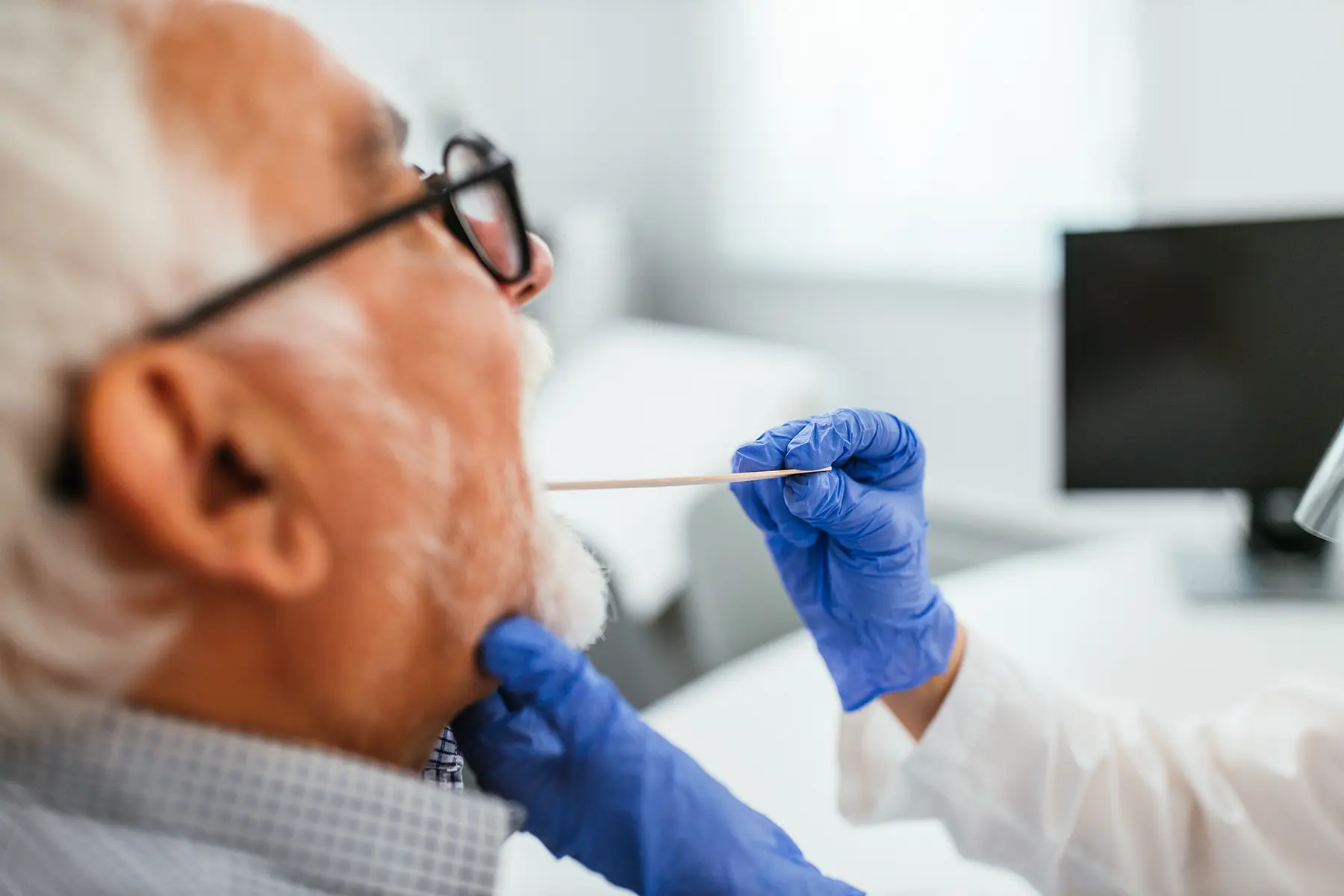
A new portable device is changing the complicated landscape of TB diagnostics. Called MiniDock MTB, the device is battery-powered and delivers results within 30 minutes, not days or weeks like standard TB tests. It can detect infection with a mere tongue swab, too, and has proven to be at least as accurate as the other laboratory tests.
In fact, according to a study published in the New England Journal of Medicine, the MiniDock performs as well as Xpert Ultra, a rapid molecular diagnostic test used to simultaneously detect the TB bacteria and any resistance to the treatment drug rifampicin. But the new device is significantly more sensitive than smear microscopy.
Now, rather than having to wait days or weeks, a patient using the MiniDock can now be diagnosed and possibly start treatment the same day.
“The sooner you know, the sooner you can treat,” Dr. Gelman explains. “It improves the linkage between diagnosis and care.”
The use of MiniDock MTB will prove particularly important among groups in South Florida who experience barriers to accessing healthcare, and who ironically are often the hardest hit by the disease. The test can come to the potential patient instead of requiring a patient to come into a clinic or mobile lab, and it doesn’t sacrifice reliability. “It is arguably as good or better than the sputum smear microscopy for a fraction of the cost,” he adds.
The waxy, difficult-to-grow bacterium that causes TB was first identified almost 150 years ago.
But it remains one of the world’s top infectious killers and the deadliest bacterial infectious disease, according to the World Health Organization. TB is classified into two forms: TB infection and TB disease. In TB infection, individuals carry the bacteria but display no symptoms and are not contagious. Some people “live years with the infection and don’t know it,” Dr. Gelman says.
The infection, however, can develop into disease when the immune system weakens, which then allows the bacteria to multiply and cause illness. About 5% to 10% of people with TB infection, also known as latent TB, will eventually develop active TB disease over their lifetimes. The U.S. Centers for Disease Control and Prevention estimates that up to 13 million people in the U.S. have latent TB infection, but most will not progress into the disease phase.
In 2024, some 10.7 million people fell ill with TB disease worldwide, including 1.2 million children. About 1.23 million people died from it. Provisional 2025 data from the CDC estimates the number of TB cases in the U.S. at 10,260, with 572 deaths.
Even as most people in the United States are at low risk for TB, pockets of concern remain.
For example, Florida is number 4 among states in total TB disease cases, with a reported 675 in 2025. (California, Texas and New York rank higher.)
According to Florida Department of Health surveillance data, Miami‑Dade accounts for roughly 20 to 22% of Florida’s TB disease cases. Its TB rate is almost twice the Florida average and roughly double the U.S. average, mainly driven by international visitors, migration patterns, and population density.
For decades, public health experts have been working on making the diagnosis of tuberculosis easier, quicker and cheaper. The MiniDock MTB addresses those concerns by borrowing a technology similar to hospital-based COVID tests. It uses material from sputum or a tongue swab, heats it, spins it, and then scans it for DNA from the TB bacteria.
“It’s small enough that you can use it in the clinic or bring it out into the field, which certainly makes it very helpful,” Dr. Gelman says.
That said, the new testing method does have two drawbacks.
It does not identify latent TB infection because the bacterial load is too low, and it cannot distinguish drug-resistant TB from TB that is susceptible to first-line medication regimens. Dr. Gelman says, however, that the new molecular test will be valuable in identifying the most infectious cases quickly. It complements other tests that can detect latent TB by measuring the immune system’s response to it.
And if a clinician suspects a drug-resistant variety, the MiniDock MTB can be followed with more testing that includes culture‑based resistance testing with drug‑susceptibility assays, or molecular panels that detect resistance mutations.
Written by Ana Veciana-Suarez. Reviewed by Michael A. Gelman, M.D.
Sources
https://www.nejm.org/doi/full/10.1056/NEJMoa2509761
https://www.cdc.gov/tb/hcp/clinical-overview/latent-tuberculosis-infection.html
https://www.who.int/news-room/fact-sheets/detail/tuberculosis
https://www.cdc.gov/tb-data/aboutprovisionaldata/2025-provisional-data.html
https://www.flhealthcharts.gov/ChartsDashboards/rdPage.aspx?rdReport=NonVitalIndNoGrp.Dataviewer
Tags: MiniDock MTB, portable TB test, rapid TB test, TB test, TB testing, tongue swab TB test, tuberculosis diagnosis, tuberculosis test, tuberculosis testing

