
Patient With Metastatic Melanoma Beats Cancer After Clinical Trial Treatment
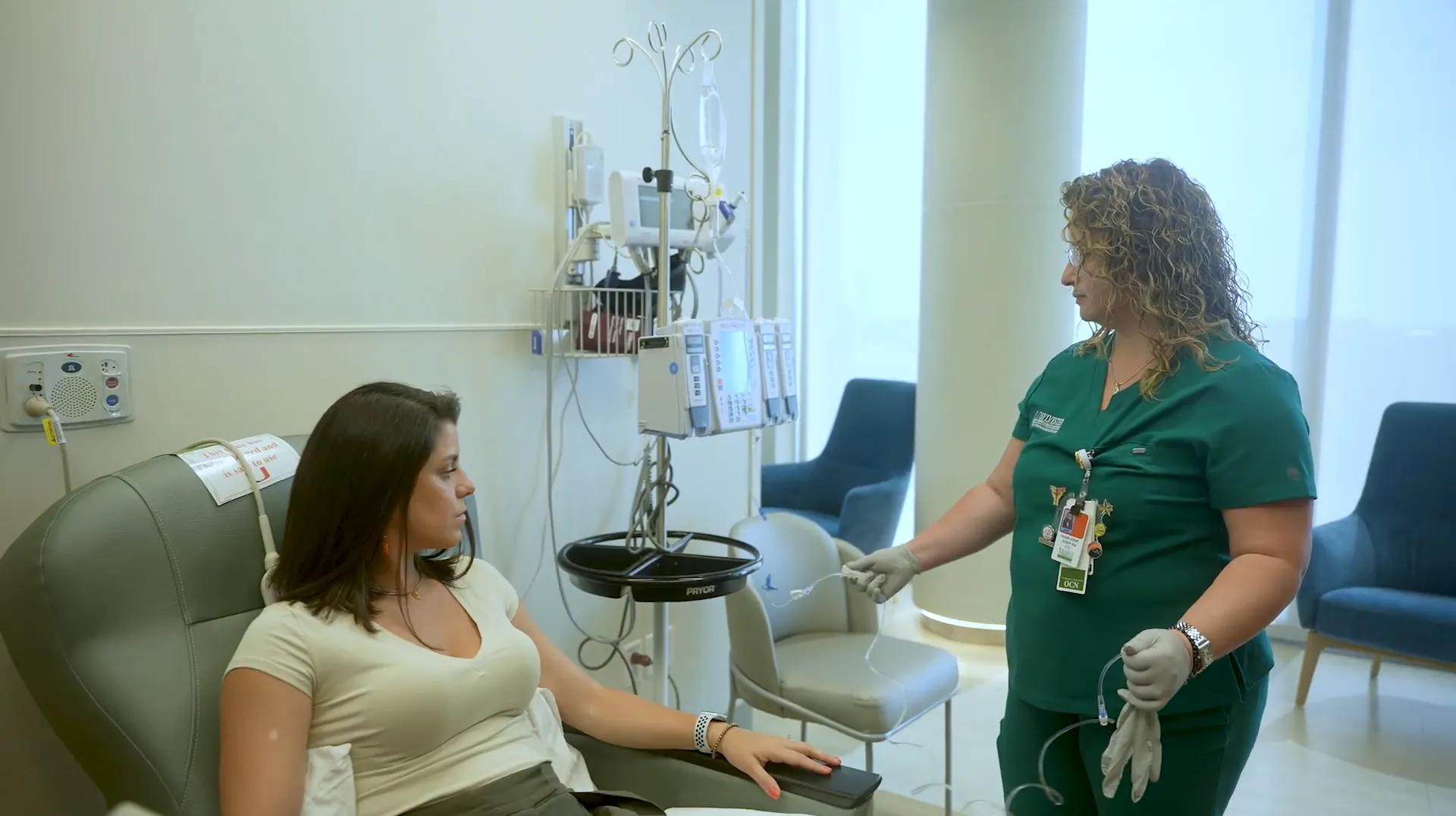
Sixteen years after overcoming melanoma, Pamela Lobatón, at just 38 years old, was once again diagnosed with melanoma, a type of skin cancer that, although not the most common, can be highly aggressive.
At the time of her first diagnosis, the cancer had been treated with surgery and appeared to be gone. But this time was different: The melanoma had returned and spread to her lymph nodes and lungs.
“I was in shock. I never expected news like that after so many years,” Pamela recalls. At the time, she had three children, and her husband was away in Army training when she received the diagnosis.
It all began when she felt two nodules in her groin area near the upper part of her leg.
A biopsy confirmed that the melanoma had returned and had already spread to the lymph nodes. Soon after, additional scans revealed metastases in her lungs.
“My greatest fear was not being able to be there for my children,” she says. “I wanted to watch them grow up, support them, and be present for every stage of their lives.”
Amid the uncertainty, Pamela decided to act quickly. Her dermatologist recommended she seek care from José Lutzky, MD, a medical oncologist specializing in skin cancer and advanced melanoma at Sylvester Comprehensive Cancer Center, whom she describes as “the best, not only in Florida, but nationwide.”
“From the very first day, I felt empathy and understanding,” Pamela says. “I knew this was the medical team I needed.”
Melanoma is a type of skin cancer that originates in melanocytes, the cells responsible for producing melanin, the pigment that gives skin its color.
This cancer typically develops in areas of the skin that have been exposed to the sun for long periods of time.
“Melanoma can behave aggressively depending on when it is diagnosed, but when detected early, most patients can be cured,” Dr. Lutzky explains.
For that reason, early detection is critical, since this type of cancer can spread rapidly to other parts of the body if not identified in time.
“It can penetrate deeply into the skin, reach the lymph nodes, and from there spread to other organs. When that happens, the patient requires intensive treatment,” explains Dr. Lutzky.
That was Pamela’s case, and she was invited to participate in an immunotherapy clinical trial.
“I felt it was an opportunity I couldn’t pass up,” she recalls.
“Pamela met all the eligibility criteria for the study,” Dr. Lutzky explains. “The treatment was a combination of two immunotherapy drugs that has proven to be more effective than using a single therapy alone.”
Immunotherapy represents one of the most important advances in the treatment of advanced melanoma. Unlike traditional chemotherapy, this type of treatment strengthens the immune system so the body itself can attack cancer cells.
Although she experienced some side effects, Pamela says they were manageable.
“I never lost my hair,” she explains. “The toughest part was the fatigue, some hormonal issues, and vitiligo, but the doctor told me that was a sign the treatment was working.”
Just four months after starting treatment, the lesions in her lungs began to shrink.
“Every time I saw them getting smaller, I felt happy,” she recalls.
Over time, the lung lesions disappeared completely.
Finally, after approximately one year of treatment, she received the news she had been hoping for: There was no longer any evidence of melanoma in her body.
“I feel blessed and deeply grateful to God,” she says emotionally. “Now I’ll be able to watch my children grow up and continue enjoying my family.”
For Dr. Lutzky, advances in immunotherapy have completely transformed the outlook for patients with metastatic melanoma.
“Ten years ago, only about 5% of patients with advanced melanoma survived five years,” he explains. “Today we’re close to 50%. It’s incredible how far science has come.”
However, for patients who do not respond as well to treatment, there are now new therapeutic options available, including innovative medications and highly promising clinical trials.
“We are focused on continuing to develop treatments for those patients who still need something more,” the doctor says.
Dr. Lutzky says that access to clinical trials has been key to achieving those advances.
“At Sylvester Comprehensive Cancer Center, we are a center designated by the National Cancer Institute, which allows us to offer clinical studies and treatments that are not available in many other places,” he explains.
The doctor also emphasizes the value of a multidisciplinary team focused exclusively on melanoma and other skin cancers.
“We have oncologists, surgical oncologists, radiation oncologists, and specialists dedicated specifically to this type of cancer,” he says.
Pamela says that comprehensive care made a major difference throughout her treatment.
“From the person who answered the phone to the nurses, doctors, and valet parking staff, everyone treated me with kindness,” she says. “I never felt alone.”
During the process, she also received psychological support, something she considers essential to maintaining a positive attitude.
“The mind is very important,” she explains. “I had a psychologist who supported me throughout this entire journey, and that helped me tremendously.”
Pamela also found strength in her faith, her family, and maintaining healthy habits such as exercise and good nutrition.
Today, she shares her story in hopes of inspiring others to act quickly if they notice any suspicious signs and to seek specialized care.
“If something on the skin is changing, it should be checked by a dermatologist,” Dr. Lutzky insists.
“Warning signs can include changes in color, irregular borders, growth, bleeding, or other abnormalities. Those are signs that something may be happening.”
People with fair skin and high sun exposure are at greater risk, since ultraviolet radiation is associated with most melanoma cases. However, there are other risk factors as well.
“People who have many moles or a family history of atypical moles have a higher incidence of melanoma,” the specialist explains. “Even people of any skin color can develop melanoma, especially on the hands, feet, or areas with less pigmentation.”
Dr. Lutzky also explains that there are fewer common types of melanomas that can appear in areas not exposed to the sun.
“There are ocular melanomas, mucosal melanomas, and other rarer types that can also be very aggressive,” he says. “The most common remains cutaneous melanoma in sun-exposed areas.”
And for Pamela, the message is clear and hopeful.
“Seek help, keep faith, and don’t lose hope,” she says. “Thanks to this treatment and the team at Sylvester Comprehensive Cancer Center, today I can say that I am cancer-free.”
After a cancer diagnosis, patients can access specialized care and comprehensive treatment at all locations of Sylvester Comprehensive Cancer Center, including the new UHealth SoLé Mia center in North Miami and the Sylvester’s Kenneth C. Griffin Cancer Research Building in Miami, as well as UHealth Doral and The Lennar Foundation Medical Center in Coral Gables.
Article and video written and produced by Shirley Ravachi for “Cuidando Su Salud,” a series of healthcare-related stories that regularly air on Telemundo 51. For more stories like this, visit the YouTube channel of Sylvester Comprehensive Cancer Center.
Tags: advanced melanoma, Dr. Jose Lutzky, immunotherapy, skin care in Miami, Sylvester Comprehensive Cancer Center, UHealth SoLe Mia

