
What is Phantom Limb Syndrome?
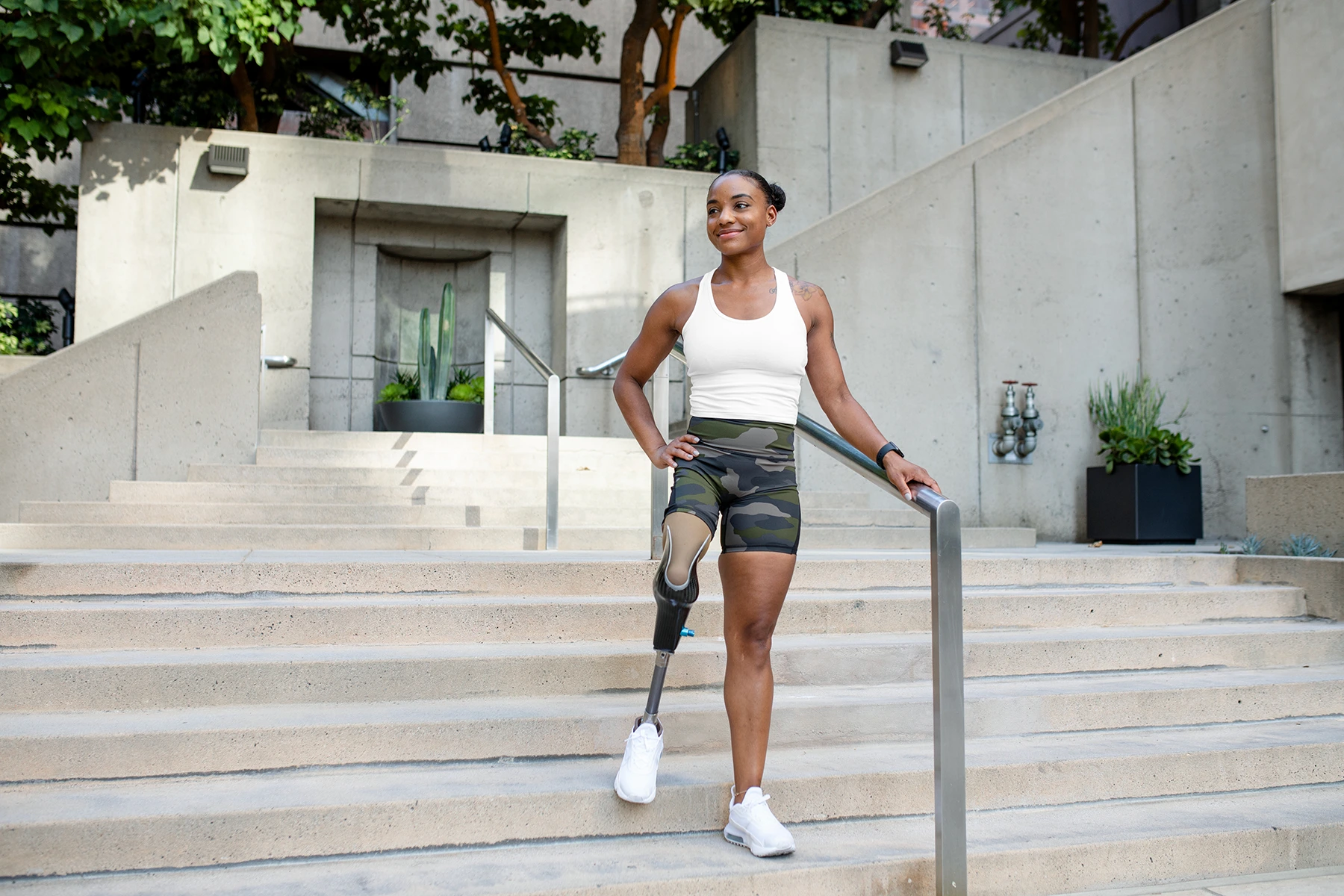
Many people who have undergone an amputation experience a feeling known as phantom limb sensation, a feeling that the missing limb is still there.
The symptoms of phantom limb sensation and pain can range from:
- persistent aching
- cramping
- stabbing pain
- burning sensation
- a tingling or itching feeling that’s perceived to be coming from the amputated appendage
Some people with phantom limb syndrome feel like their amputated body part is “stuck” in an uncomfortable position. These unwanted sensations can be distracting and hard to live with on a daily basis.
“Phantom limb sensation is common and expected after amputation,” says Christopher Alessia, D.O., who specializes in physical medicine and rehabilitation with the University of Miami Health System. “Phantom limb pain (PLP), also common, is defined by its discomfort and is something we can treat.”
Dr. Alessia and the amputation and rehabilitation specialists at UHealth’s Total Limb Care clinic offer innovative treatments to help alleviate phantom limb sensation and pain — advancing patients’ abilities and improving their quality of life.
What causes phantom limb pain?
Your brain maintains a map (a schema) of your body.
This allows it to visualize the body’s position and the placement of its parts within its environment. This schema makes it possible for people to easily move through the world without looking down at their body or in a mirror to complete simple tasks. This is why you’re easily able to put your fingertip in your ear without looking at your finger or your ear.
Phantom limb pain is thought to be caused by alterations in the somatosensory and motor areas of the brain, Dr. Alessia says.
Following an amputation, the brain’s map may maintain a distorted impression of the missing body part, leading to the feeling that the limb remains intact.
“Because of the loss of the body part in amputation, the boundaries of this map in the brain that were once clear become less distinct,” says Natalia Fullerton, M.D., an orthopedic and plastic hand surgeon with UHealth’s Total Limb Care clinic. “As a result, the body feels pain in a location that is no longer physically there.”
In addition, the brain is no longer receiving the expected feedback from the missing limb’s nerves. This can be due to central nervous system changes, such as altered sensory information from the spinal cord or brain, or peripheral nerve injury in the residual (intact) limb. Nerve pain may be triggered by stress, weather changes, or a poorly fitting prosthetic.
How is phantom limb pain treated?
Some treatments and therapies focus on changing the brain’s body schema to accurately reflect the amputation. Other approaches aim to dull the signals of neurological pain or distract the brain from unwanted sensations.
“The benefit of the Total Limb Care clinic is that we’re able to expand the multidisciplinary therapies we can offer because we have so many options and the breadth of knowledge we have access to,” Dr. Fullerton says. “Each patient is different in terms of the experience and degree of their pain, as well as the different therapies they’ve already tried. Depending on each patient’s current situation, we are able to tailor what we offer.”
“UHealth’s physical medicine and rehabilitation specialists, prosthetists, and plastic surgeons work together to address prosthetic concerns, skin issues, pain, and limb reconstruction. For many of our patients, PM&R, plastic surgeons, and orthopedics all play a role in their care, and the coordination happens in one clinic visit,” says Dr. Alessia.
“We take a tiered approach to treatment that includes the following pharmacologic, non-pharmacologic, and interventional therapies,” he says. “We focus on the non-pharmacologic interventions, which have the best research literature in support of their efficacy. However, given the challenges of phantom limb pain, we frequently use a combination of treatments. These treatments can be used lifelong to assist in PLP treatment.”
Ease phantom limb pain through desensitization techniques, including:
- Limb massage
- Exposure to different textures
- Transcutaneous electrical nerve stimulation (TENS) unit: This small, portable device uses low-voltage electrical currents to provide temporary pain relief. TENS units work by sending mild electrical pulses through wires to pads placed on the skin near the painful area. These pulses can block pain signals or stimulate the body to release its own pain-relieving chemicals, such as endorphins.
Rehabilitation techniques for phantom limb pain
“We use these therapies to ‘sharpen’ the cortical representation of the residual limb,” Dr. Alessia says.
- Physical therapy exercises: left/right discrimination exercises and strengthening exercises targeting muscles that are important for moving with a prosthesis (which may indirectly help with phantom pain)
- Guided/graded motor imagery: guiding the patient to imagine the placement and movement of their amputated limb, sometimes in sync with moving their residual limb, to retrain the brain
- Mirror therapy: using a mirror to create a reflection of the residual limb, giving the brain the visual impression that the phantom limb remains intact and functional
- Virtual reality therapy: using a virtual reality device to enable the patient to visualize their amputated limb and “see” it move freely and painlessly
“We are working with engineering students at UM who have developed an augmented reality (AR) program specifically for amputees,” Dr. Fullerton says. “The idea is that with the AR glasses, our patients can see their missing limb and have reported significant improvement in their PLP.”
Mental health care for phantom limb pain
Cognitive behavioral therapy (CBT): When appropriate, amputee patients can be referred to psychological counseling for CBT. CBT helps patients reframe negative thoughts and emotions associated with their pain.
Eye Movement Desensitization and Reprocessing (EMDR): This type of psychotherapy helps people heal from and process difficult memories. The therapist guides the patient to focus on a distressing memory while simultaneously engaging in bilateral stimulation, such as eye movements, which helps desensitize the memory and can lead to reduced distress.
Hypnosis: For those who respond to hypnotic suggestions, hypnosis may enable the brain to “forget” the phantom limb, or to disrupt the feedback loop of painful sensations associated with the amputated limb.
Community support: Support groups for patients and families can help amputees learn coping strategies for daily life, provide opportunities to engage in group sports and other activities, and offer an understanding community. “We also work with our prosthetic vendors to link patients into community events for amputees to help reintegrate people back into the community,” says Dr. Alessia.
Pharmacology treatments for phantom limb syndrome
The following prescriptions drugs can help disrupt the brain’s perception of (or its reaction to) physical and emotional pain, reducing the painful or uncomfortable sensations associated with phantom limb syndrome.
- Gabapentin: anticonvulsant medication used to treat nerve pain
- Pregabalin: an anticonvulsant and analgesic medication used to treat chronic nerve pain
- Serotonin-norepinephrine reuptake inhibitors: an antidepressant medication that can treat chronic pain by increasing serotonin and norepinephrine levels in the brain
- Tricyclic antidepressants: a drug used primarily used to manage depression and chronic pain
- Opioids: often called “pain killers”; provided by UHealth’s pain medicine specialists
Interventional therapies for PLP
- Targeted muscle reinnervation: This is a surgical procedure that reroutes severed nerves to healthy muscles, giving the nerves a new function. This can relieve pain caused by severed nerve endings and improve control of prosthetic limbs. The procedure is especially helpful for managing neuromas (painful growths of nerve tissue).
- Steroids can be injected around neuromas, reducing painful inflammation.
- Neuromodulation: UHealth’s pain medicine specialists use electrical impulses or medication to alter nerve activity to relieve pain.
There is no established way to measure the pain associated with PLP, Dr. Fullerton says. “There are generalized pain scales and questionnaires that ask patients how their pain affects them. But, these are not specific to PLP. Many times, amputees will have PLP as well as other pains associated with their amputation, which make these questionnaires less reliable.
There is no clear way to tell whether one treatment for PLP works better than another, or whether therapy is specifically targeting PLP, she says. “Given this limitation, one of our main research goals as an amputation team is to create a questionnaire that can accurately measure each patient’s experience of PLP. Currently, we are developing the tool and hope to be testing its efficacy soon.”
If you are seeking relief from phantom limb pain and live in South Florida, call 305-243-4433 or request an appointment online with UHealth’s Total Limb Care clinic.
Written by Dana Kantrowitz. Medically reviewed by Dr.s Alessia and Fullerton.
Tags: Dr. Christopher Alessia, Dr. Natalia Fullerton, Limb loss support, Neuropathic pain management, Pain management strategies, Pain relief therapies

