
What You Should Know About Air Quality and Lung Cancer Risk
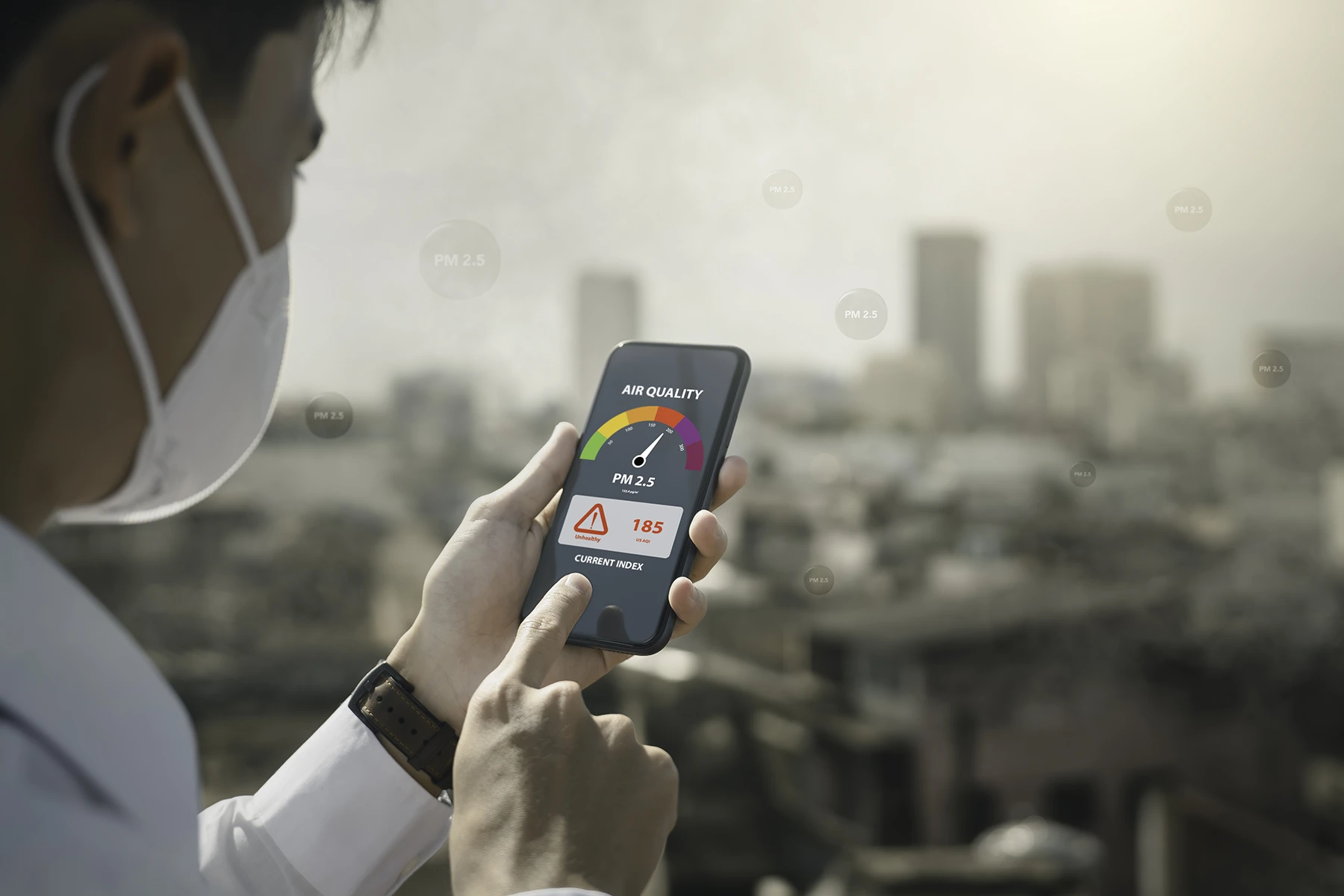
Lung cancer deaths related to tobacco use are decreasing around the world. But concern about lung cancer related to air pollution is increasing.
In a study published earlier this year, researchers at Sylvester Comprehensive Cancer Center, part of the University of Miami Miller School of Medicine, found that air pollution is linked to almost 20% of tracheal, bronchial, and lung cancer deaths worldwide.
Scientists are especially concerned about a type of air pollution called ambient particulate matter, said Chinmay Jani, M.D., a chief fellow in hematology and oncology at Sylvester, who led the study.
Ambient particulate matter is also known as PM 2.5, because it is made of particles that are 2.5 micrometers and smaller. Breathing in these particles can cause lung inflammation and DNA damage in lung cells, which are directly related to lung cancer, Dr. Jani says.
PM 2.5 can come from industrial and power plant emissions, exhaust from older vehicles, solid waste burning, wildfire smoke and other sources.
“This material is now the second-most important risk factor for lung cancer, after tobacco smoking, so it’s important to create awareness,” Dr. Jani says.
Who is at risk for lung cancer related to air pollution?
Lung cancer incidence in the United States is rising in people who have never smoked, especially women and younger people, says Estelamari Rodriguez, M.D., M.P.H., a thoracic oncologist at Sylvester who contributed to the study.
“If you have lungs, you can get lung cancer. If you breathe air, you can get lung cancer,” Dr. Rodriguez says.
The risk of air pollution-linked lung cancer is higher in developing countries, she says. But in the United States, people who live or work long-term in areas with high PM 2.5 pollution face increased risk.
Dr. Jani said other people who should be aware of PM 2.5 exposure include:
- People who have underlying conditions like COPD, asthma or other lung disorders, who are at higher risk of lung cancer related to PM 2.5
- Members of sensitive groups, such as older adults, pregnant people and children
- People who frequently travel to areas with high PM 2.5 pollution.
How to reduce air pollution exposure outdoors
The Air Quality Index allows anyone to monitor air quality. If the AQI in your area is high, Dr. Jani says, you can wear a surgical or N-95 mask or limit your time outdoors.
People with underlying health conditions or who are in sensitive groups should avoid going out when the AQI is high and consider not traveling to areas with high levels of air pollution, he says.
How to reduce air pollution indoors
The rate of lung cancer deaths related to household air pollution is going down around the world, according to the study, but it’s still a concern.
If you use wood or other solid fuels for cooking or heating, use good-quality materials and monitor the air quality in your home, Dr. Jani says. Dr. Rodriguez recommends cooking with ventilation and using HEPA air filters.
Asbestos and radon also contribute to lung cancer risk. If you live in or move to an older home, check for these materials.
How to reduce air pollution for everyone
Reducing PM 2.5 exposure starts at home, but large-scale changes like reducing carbon emissions, increasing renewable energy and urban planning can reduce the risk for everyone, says Dr. Rodriguez.
“I think people can advocate for air monitoring in their own communities,” she says. “Start locally, and then look at the broader policy of the country.”
Reducing tobacco use remains important
Even though lung cancer deaths related to tobacco use have decreased, tobacco is still a significant risk factor for many people.
“First and foremost, stopping smoking or any kind of tobacco consumption is going to help the most,” Dr. Jani says. People should also avoid secondhand smoke.
Dr. Rodriguez says she’s also concerned about vaping, which causes direct lung injury.
“That’s not air pollution, but it’s kind of the same concept,” she says. “These things can take decades to cause cancer, and we all need to be aware of it.”
When to talk to your doctor
Current lung cancer screening guidelines from the American Cancer Society recommend yearly screening for people ages 50-80 who have a history of smoking.
But if you don’t smoke, Dr. Rodriguez says, you should still tell your doctor if you live or grew up in an area with high PM 2.5 pollution, grew up around secondhand smoke or have other long-term exposures to non-tobacco risk factors.
Coral Olazagasti, M.D., a medical oncologist at Sylvester whose research focuses on lung cancer detection, says everyone should be aware of “red flag” symptoms such as a dry cough, chest pain or shortness of breath that doesn’t go away or unexplained weight loss.
“When you’re concerned about something, follow your gut,” Dr. Olazagasti says. “As doctors, we’re always willing to listen to our patients.”
Written by Tara Roberts for Sylvester Comprehensive Cancer Center.
Tags: Air Quality Health Risks, Dr. Coral Olazagasti, Dr. Estelamari Rodriguez, Non-Smoker Lung Cancer Risks, PM 2.5 Exposure, Pollution and Cancer, Sylvester Comprehensive Cancer Center

