
A Major Advance in Pancreatic Cancer Care
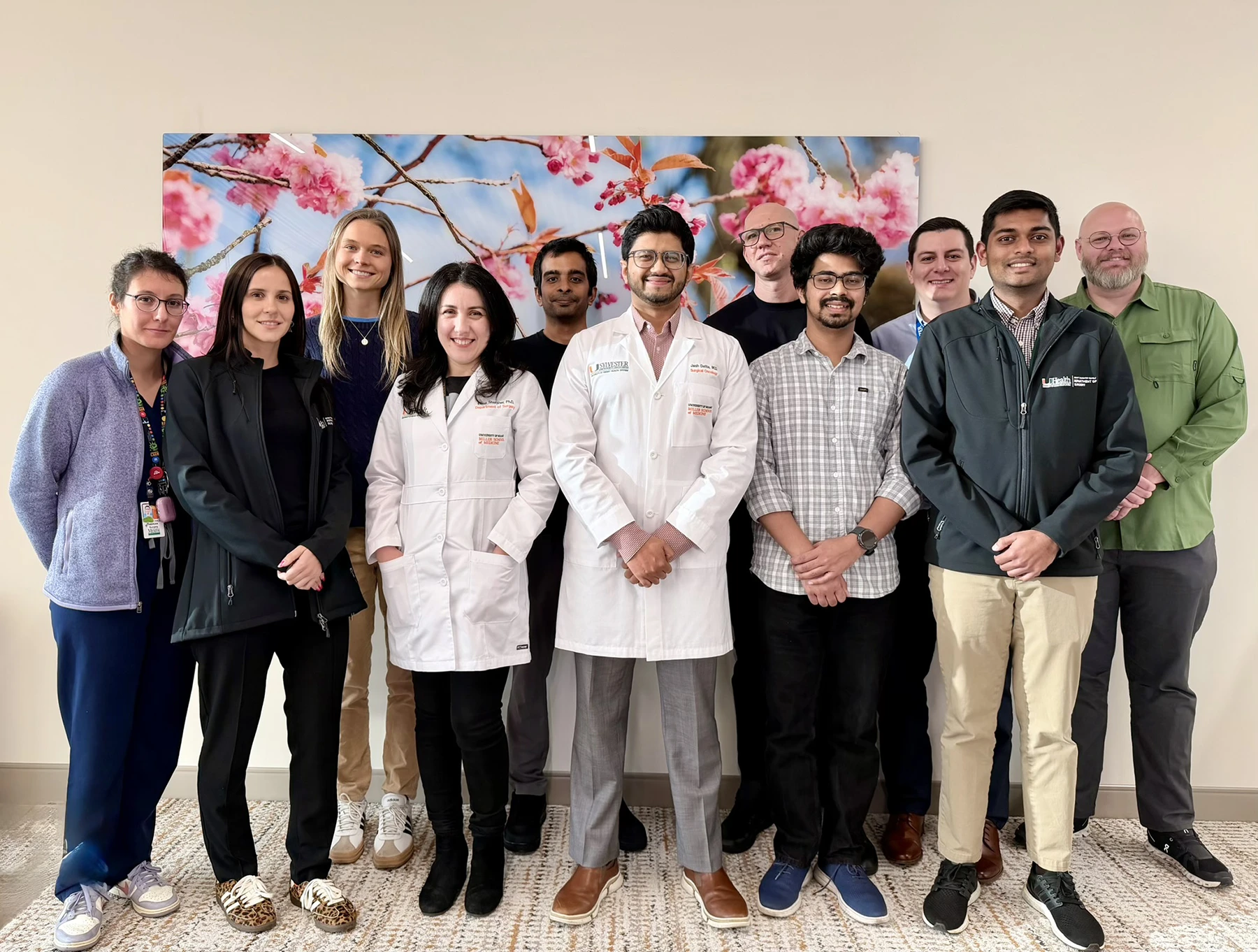
A new drug called daraxonrasib nearly doubled survival rates for patients with metastatic pancreatic cancer in a major clinical trial, offering new hope against one of the deadliest forms of cancer.
A new pancreatic cancer drug is renewing hope for individuals who face a cancer with one of the lowest five-year survival rates. Though the drug is not yet approved by the U.S. Food and Drug Administration, the agency is granting an Expanded Access Program eligibility for certain patients, a nod to the treatment’s potential and likely approval.
Jashodep Datta, M.D., associate director for translational research at Sylvester Pancreatic Cancer Research Institute and co-leader of Sylvester’s Gastrointestinal Site Disease Group, describes the drug as an unprecedented breakthrough. “There have been multiple attempts to target KRAS (a cancer‑driving gene), but they haven’t worked,” he says. “KRAS was considered undruggable.” Until now.
Daraxonrasib nearly doubles survival rates.
The new drug is called daraxonrasib, and it’s taken daily by mouth. When the company that developed the drug, Revolution Medicines, presented results of its phase 3 clinical trial of 500 patients at the 2026 American Society of Clinical Oncology (ASCO), the researchers received several standing ovations, and for good reason. The study was published in The New England Journal of Medicine.
In clinical trials, daraxonrasib almost doubled overall survival rates of metastatic cancer patients from 6.7 months to 13.2 months when compared to the current standard treatment of chemotherapy. The drug reduced the risk of death by 60% for patients who had previously received chemotherapy. What’s more, the drug appears to be well tolerated by many patients, meaning fewer patients may stop treatment because of side effects.
Not a cure, but a foundation and an inspiration.
But it’s not a cure. While daraxonrasib slows down the disease, the cancer cells develop a resistance to the therapy, which in turn allows the cancer to grow again. That said, “it’s a huge opportunity to this as a foundation for other treatment,” adds Dr. Datta.
Peter Hosein, M.D., a medical oncologist at Sylvester Comprehensive Cancer Center, and his colleagues participated in the daraxonrasib Phase 3 trial. The study, he says, “has spurred renewed inspiration and energy to researchers working in the field, since the feat that was considered previously impossible is now possible.”
Dr. Hosein, who is also the co-leader of Sylvester’s Gastrointestinal Cancer Site Disease Group, adds that no other studied treatment in pancreatic cancer has doubled the survival rate in a large, randomized study.
To put into perspective the importance of these findings, it’s essential to understand the biology of pancreatic cancer and why (and how) daraxonrasib works on the KRAS mutation.
Why is pancreatic cancer so difficult to treat?
An estimated 67,530 Americans are expected to be diagnosed with pancreatic cancer this year, and more than 52,740 will die from the disease, according to the American Cancer Society. In fact, the five-year survival rate remains flat, at 13%, making it the deadliest of the major cancers. It is currently the 3rd leading cause of cancer-related death in the United States, after lung and colon. (Put another way: about 97% of patients with metastatic pancreatic cancer die within the first five years of diagnosis.)
Pancreatic cancer is so deadly because it exhibits no early warning sign and there are no screening tests. By the time a patient seeks medical care for symptoms such as nausea, jaundice, diarrhea, fatigue, unexplained weight loss or pain in the upper abdomen and back the cancer has usually spread to other organs.
Treatment depends on the stage of diagnosis. In the minority of cases, when the cancer is caught early, surgical removal of the tumor with chemotherapy is standard. But for the more than 80% of patients, different combinations of chemotherapy are used.
“There are very few options,” Dr. Datta says.
What makes daraxonrasib different?
Unlike chemotherapy, which can also destroy healthy cells, daraxonrasib targets the genetic mutation KRAS, which drives most pancreatic cancers. KRAS is the acronym for Kirsten rat sarcoma viral oncogene homolog. Under normal conditions, the KRAS gene “is an on/off switch for cell growth,” Dr. Datta explains. When it mutates, however, “it gets stuck on the ‘on’ position and cells continue to multiply without control.”
For decades, attempts to target KRAS focused on “unsticking” the switch, but these attempts didn’t work because KRAS found workarounds. Those early inhibitor drugs were also aimed at very specific proteins that acted after KRAS signaled. They did not, however, act on KRAS itself.
Daraxonrasib, on the other hand, interacts with cyclophilin A, a protein that helps other proteins form into their final shape. This interaction helps daraxonrasib bind to the mutation that is stuck in the ‘on’ switch, ultimately shutting off the malfunctioning switch. In addition, daraxonrasib inhibits all KRAS cancer-causing mutations, the first of its kind to do so.
Treatment aims to improve quality of life and reach more patients.
“By targeting all [KRAS] mutations, we can reach more patients,” says Dr. Datta. About 90% of patients with pancreatic ductal adenocarcinoma, the most common form, have at least one type of mutation in the KRAS gene.
The most common side effect of the new drug is a skin rash, which developed in more than 86% of patients in the study. Some also suffered GI issues, such as sores inside the mouth, diarrhea and vomiting. But when compared to the toxicity of chemotherapy, “these side effects can be tolerated and managed. Patients’ quality of life is improved,” Dr. Datta says.
Daraxonrasib is currently being tested in other solid-tumor cancers that are also driven by KRAS mutations. Ongoing trials involving patients with lung cancer and colorectal cancer are being explored.
By Ana Veciana-Suarez. Reviewed by Jashodeep Datta, M.D.
Tags: Dr. Jashodeep Datta, KRAS mutation pancreatic cancer, pancreatic cancer clinical trial, pancreatic cancer treatment, Peter Hosein, Sylvester Comprehensive Cancer Center

