Beyond the Scalpel: Skin Cancer Advances Give People More Choices
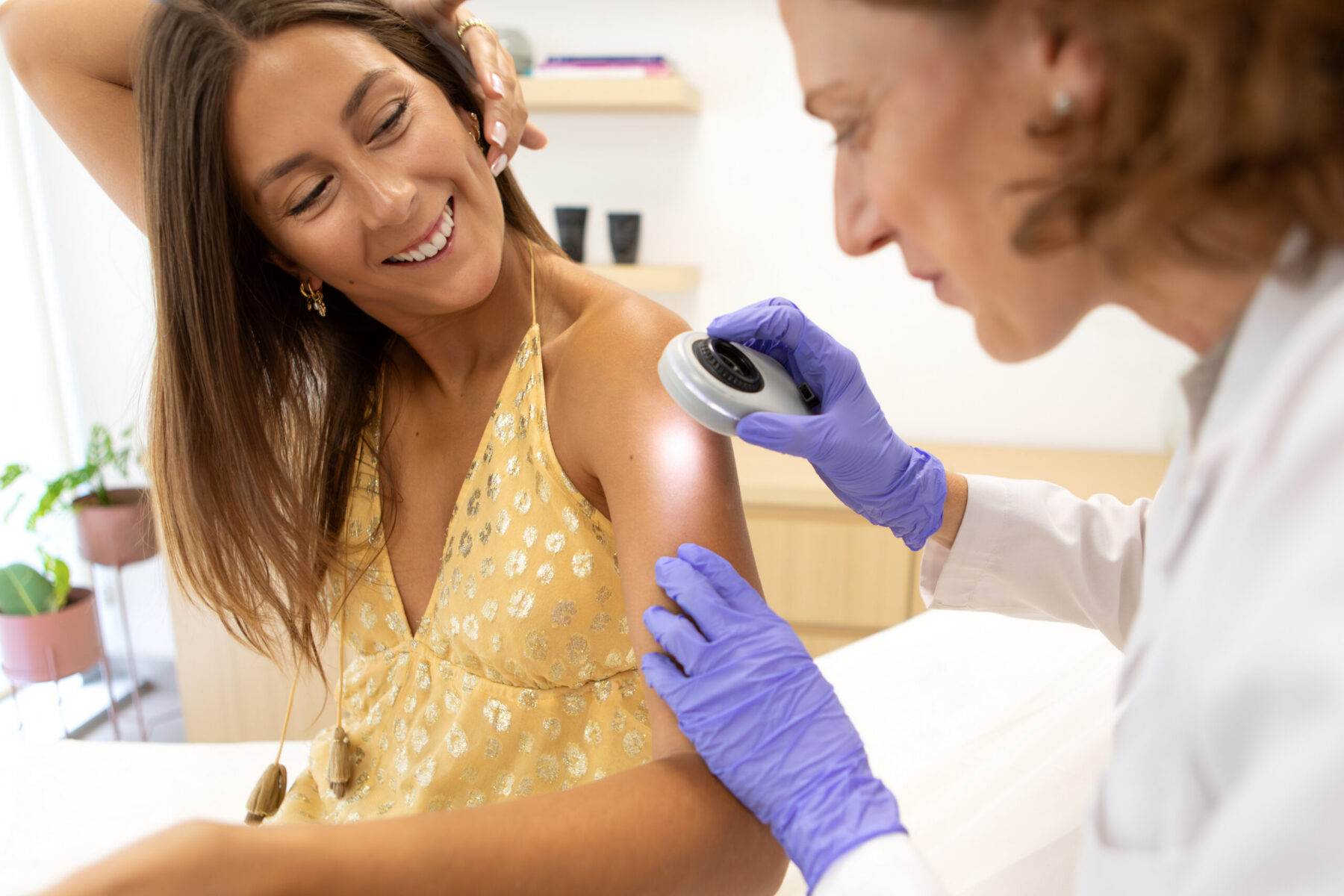
For decades, surgery has been the main treatment for skin cancer. In recent years, innovations in skin cancer treatment have made surgery one of many options. “The treatment approach has actually changed dramatically over the last five years for locally advanced skin cancers,” says Stuart Samuels, M.D., Ph.D., a radiation oncologist at Sylvester Comprehensive Cancer Center, part of UHealth – University of Miami Health System.
Skin cancer treatment options advancing faster than ever
Today, advances in radiation therapy, immunotherapy and targeted treatments offer an increasing number of options. These therapies help preserve your appearance and function in sensitive areas such as the eyes, nose, ears and lips. They can reduce the extent of surgery or even help you avoid it altogether.
For South Floridians, who face year-round sun exposure and some of the nation’s highest rates of skin cancer, understanding advanced treatment options can mean the difference between having a visible scar on your face or even a skin graft and no noticeable scar at all.
When surgery isn’t the best answer
Most skin cancers can be successfully treated with surgery. Mohs surgery remains the gold standard for treating non-melanoma skin cancers, such as basal cell and squamous cell carcinomas.
Related read: Is Mohs Surgery Still the Best?
However, treatment decisions become more complicated when cancer develops in cosmetically or functionally sensitive areas. Cancer on the eye, eyelid, nose, ear or lip may require extensive reconstruction after surgery. Some people have medical conditions that make surgery more difficult, especially older adults.
In these situations, skin cancer specialists may consider alternative approaches to treat the cancer while minimizing the impact on your appearance, quality of life or overall health.
The following are some non-surgical options available at Sylvester.
Radiation therapy
Radiation therapy is an important treatment option for anyone who can’t undergo surgery or prefers an alternative. Side effects, such as temporary skin irritation, often resolve within weeks.
- For stage 1 skin cancer: It can achieve high rates of disease control while avoiding surgery altogether.
- For complex or disfiguring tumors: It can lead to better outcomes.
- For higher-risk cancers, such as a deep tissue tumor or when microscopic cancer cells remain after surgery: It can destroy any remaining disease and decrease the risk of recurrence.
Proton therapy is an additional radiation therapy option for deeper or more advanced skin cancers. Unlike traditional radiation, proton therapy reduces exposure to nearby healthy tissues by delivering radiation to a targeted area.
Depending on the cancer type and stage, radiation may range from a few treatments over two weeks to longer treatment courses of six weeks. “We want to give the most effective treatment with the least amount of toxicity,” says Dr. Samuels.
Immunotherapy is transforming treatment for advanced skin cancer
One of the biggest recent breakthroughs in skin cancer care is immunotherapy. Unlike surgery or radiation, immunotherapy uses the body’s immune system to identify and attack cancer cells.
Immunotherapy is an increasingly standard part of treatment for locally advanced skin cancers or cancer in a difficult-to-treat place, like near the eye or near cartilage. It can shrink tumors before surgery and even eliminate the need for surgery.
“More than half of patients on our immunotherapy trials will have a complete response to the immunotherapy, so when they do a biopsy after, there’s no evidence of disease,” says Dr. Samuels.
Researchers at Sylvester are conducting clinical trials that combine immunotherapy and radiation, possibly allowing some people to avoid surgery entirely while still achieving excellent outcomes.
Not everyone is a candidate for immunotherapy, and the treatment can cause immune-related side effects affecting the skin, digestive system and other organs. Still, many people tolerate treatment well.
Targeted therapies
Targeted therapy is another promising area of skin cancer treatment. New medications like Vismodogen attack the specific molecular pathways that drive cancer growth. For certain advanced basal cell carcinomas, targeted therapies may help shrink tumors before surgery or other treatments.
By reducing the size of a tumor first, physicians may be able to perform a smaller surgery, use less radiation or develop a treatment plan that better preserves surrounding tissue and function.
Why finding the right skin cancer team matters
As South Florida’s only NCI-designated cancer center, skin cancer treatment at Sylvester gives people access to dozens of clinical trials. “The field is changing very fast, with new trials, new drugs, new targeted therapies, new surgical techniques and new radiation techniques,” says Dr. Samuels.
No skin cancer case at Sylvester is treated the same. Basal cell carcinoma, squamous cell carcinoma, melanoma and Merkel cell carcinoma each behave differently and require different treatment strategies. Plus, cancer stage, location, depth and a person’s overall health all influence the best course of action. More treatment options mean better outcomes.
Finally, when dermatologists, surgeons, medical oncologists and radiation oncologists collaborate on what’s called a “tumor board,” you gain access to a broad range of expertise and treatment options. “You may see one person, but you’re getting dozens of people’s opinions because when your cancer is presented at the tumor board, where multiple experts share their expertise. Between all of us, we have hundreds of years of experience,” says Dr. Samuels.
Prevention remains the best treatment
Even as treatment options continue to advance, prevention remains the most effective strategy. Skin cancer typically results from years of cumulative sun exposure that starts in childhood. The best way to prevent skin cancer is to wear a hat and slather on sunscreen from a young age.
For adults over 50, it’s never too late to adopt sun-safe habits. “Especially in Florida, but even in other states with more cloud coverage, the UV rays penetrate the clouds. Anytime you’re going out, you should be wearing a hat and sunblock,” says Dr. Samuels.
If you are diagnosed with skin cancer, surgery may still be the right choice, but it may not be the only one. Treatment today is more sophisticated and advancing faster than ever. If you have cancer in a sensitive area, advanced disease or concerns about surgery, a comprehensive evaluation with a specialist can reveal options that weren’t available just a few years ago. “If you don’t go to a center that’s dedicated to advanced skin cancer treatment, you may not have access to all these options because the field is changing very fast,” says Dr. Samuels.
If you’ve been diagnosed with skin cancer or want a second opinion, schedule an appointment with a Sylvester skin cancer specialist.
Written by Wendy Margolin. Reviewed by Stuart Samuels, M.D., Ph.D., a radiation oncologist at Sylvester Comprehensive Cancer Center, part of UHealth – University of Miami Health System.
Tags: Dr. Stuart Samuels, immunotherapy, melanoma treatment, Mohs surgery, proton therapy, skin cancer, skin cancer treatment in Miami, Sylvester Comprehensive Cancer Center, Vismodogen

