
She Faced Cancer Again. This Time with Choices
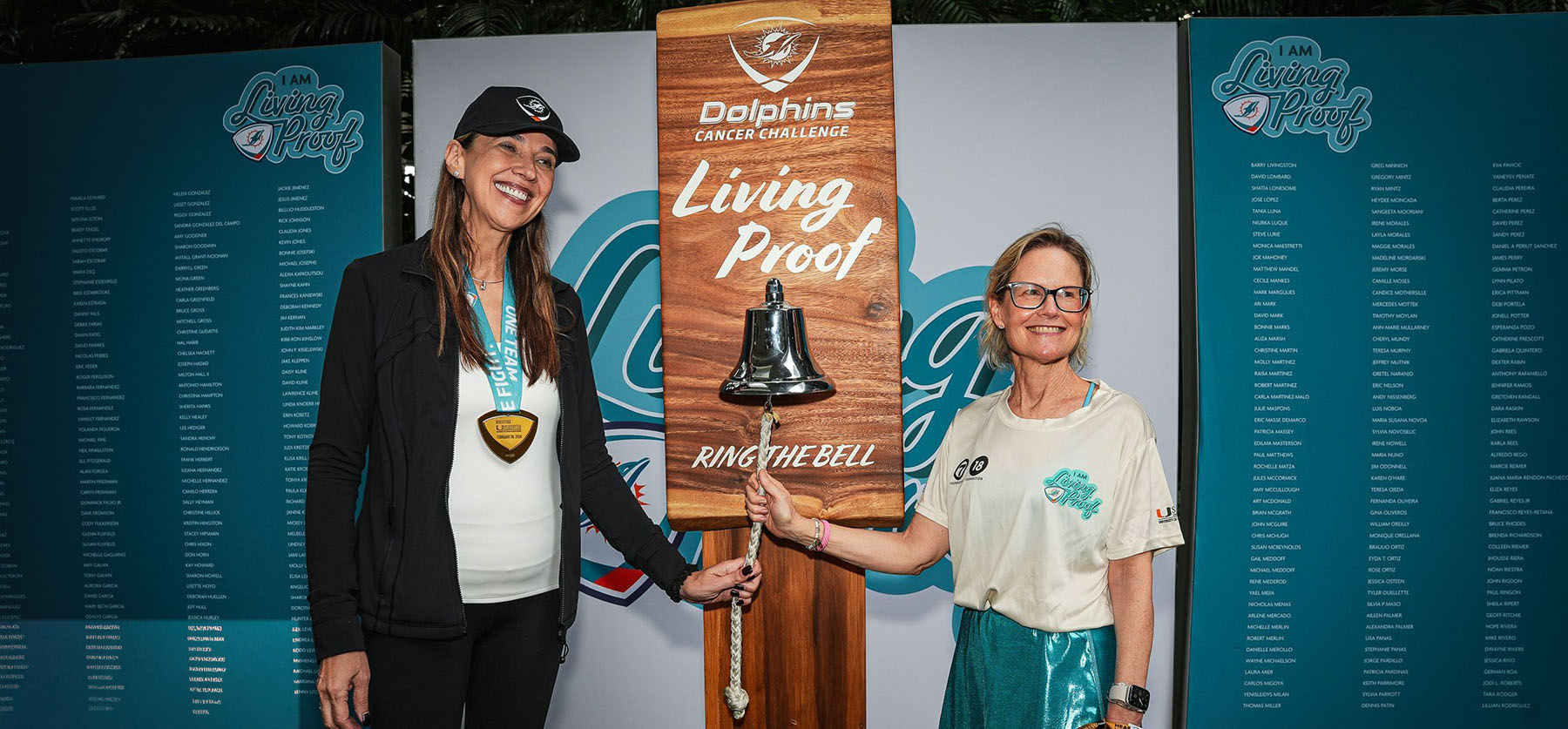
Nineteen years after surviving kidney cancer, Jennifer Buttrick thought she knew what it meant to hear the words.
You have cancer.
Then, at 56, she heard them again.
This time, it was breast cancer.
“I thought cancer was behind me,” says Buttrick. “I never expected to hear those words again.”
Her first diagnosis came in 2006, just two days after she gave birth to her third son. A 14-centimeter kidney tumor had grown rapidly during her pregnancy.
There was little to decide. The tumor had to come out. Thirteen days after giving birth, she underwent minimally invasive surgery to remove it.
That experience introduced Buttrick to Sylvester Comprehensive Cancer Center, part of the University of Miami Miller School of Medicine, and to academic medicine, an approach she came to value deeply. Over the years, she became an advocate for the cancer center, chairing fundraising events and joining its Board of Governors.
A second cancer diagnosis
In April 2025, a routine mammogram revealed two spots in her breast. One spot could not be biopsied due to its location. The other, a two-millimeter spot, was confirmed as stage 1A invasive ductal carcinoma.
For years, Buttrick had referred friends, family members and colleagues to Sylvester’s breast cancer team. She knew the physicians. She knew the care. She had seen the results.
Now, she was the patient.
“When I got my diagnosis, I knew where I would go for cancer care,” she says.
Early detection, more choices
Early detection gave Buttrick choices.
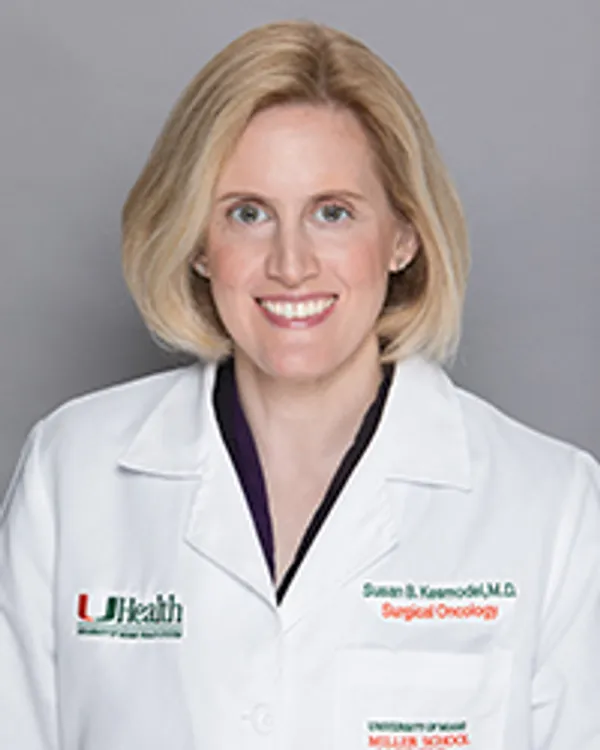
“When breast cancer is found early, women have the best chance of survival and more treatment options,” says breast surgeon Susan Kesmodel, M.D., professor in the DeWitt Daughtry Family Department of Surgery at the Miller School and co-leader of the Breast Site Disease Group at Sylvester. “Early detection gave us the opportunity to evaluate the full clinical picture and develop a treatment plan tailored to Jennifer’s disease and individual needs.”
Buttrick had been having mammograms from a young age because of dense breast tissue and a history of abnormal findings. She had undergone a biopsy at 23 and a lumpectomy in 2015 to remove a noncancerous growing mass.
The unbiopsied tumor was close to her nipple, adding another consideration. Dr. Kesmodel walked Buttrick through her options, explaining the diagnosis and her options.
“There wasn’t one right answer,” Buttrick says. “I had to decide what was right for me.”
Because of the tumor’s location, nipple preservation was more complicated. She chose a double, non-nipple-sparing mastectomy, which allowed her to avoid radiation.
“I had spent years worrying about the next mammogram or biopsy,” she says. “I wanted to make a decision that would give me peace of mind and allow me to move forward.”
Rebuilding on her terms
Choosing a mastectomy brought another decision. What would reconstruction look like?
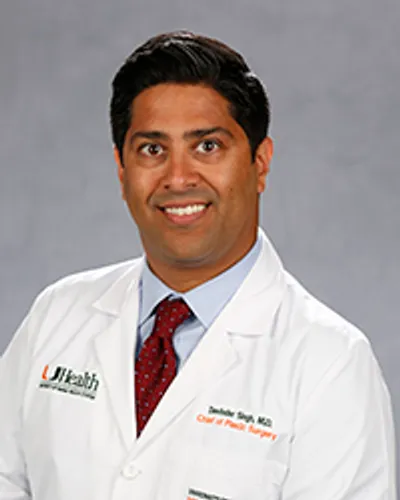
Plastic surgeon Devinder Singh, M.D., explained the possibilities. Buttrick was surprised by how many options existed and how individualized the decision could be.
“Reconstruction is highly individualized,” says Dr. Singh, chief of plastic surgery at the Miller School. “Our job is to understand what matters to each woman and help her choose an approach that fits her body, her goals and her life.”
Her mastectomy was performed in May 2025, followed by months of reconstruction. In March 2026, she completed the process with 3D nipple and areola tattoos.
Recovery was a process. Buttrick says her surgical team helped her navigate each step, always making sure she knew what to expect next. She also valued the close collaboration between her breast and plastic surgeons, allowing her to focus on preparing for surgery rather than coordinating her care.
“I never felt like I was managing my own care,” she says. “My doctors communicated with each other, and I knew they were all working toward the same goal.”
Life after treatment

Because her cancer was hormone receptor-positive, Buttrick is taking anastrozole, an aromatase inhibitor, to reduce her risk of recurrence. Managing the effects of treatment while rebuilding her strength has become an important part of her recovery.
Through Sylvester’s survivorship services, she has worked with exercise specialists, music and art therapists and dietitians, professionals who understand the unique challenges of life after cancer.
For Buttrick, that support has helped her regain strength, find balance and move forward with confidence.
But surviving cancer, she says, is not about pretending every day is good.
There are bad days. She looks for “glimmers” or small moments of joy. She knits, watches birds with her husband and takes walks. She also created a scarf in pink and orange, symbolizing her breast and kidney cancer journeys.
Now she is turning her experience into a message for other women. Know your risk. Get screened. Ask questions. Bring someone to appointments. Understand your choices.
And if treatment changes your body, she wants women to know that it does not have to change who they are.
“Even if you end up needing or choosing a double mastectomy, you can find joy in your body again after the process,” she says.
For Buttrick, knowledge transformed a frightening diagnosis into something she could navigate, one informed decision at a time.
Written by Debby Teich. Reviewed by Susan Kesmodel, M.D. and Devinder Singh, M.D.
Tags: breast cancer early detection, breast cancer risk factors, breast cancer screening, breast cancer survivor, Dr. Devinder Singh, Dr. Susan Kesmodel, early-stage breast cancer, family history of breast cancer, genetic testing, high-risk breast cancer screening, mastectomy, personalized breast cancer screening, Survivorship and Supportive Care Institute

