
Does Asthma Increase Lung Cancer Risk? What Research Shows About the Connection
UHealth experts on what the science suggests and what we still don’t know
Pulmonologist Trishul Siddharthan, M.D., talks about research on how asthma may increase your risk of developing lung cancer with as much gusto as most people reserve for their favorite sports teams. “Talking about the science of asthma and how to prevent lung cancer first thing in the morning motivates me,” he says.
Enthusiasm is just what’s necessary to uncover possible links between long-term inflammation associated with asthma and lung cancer. “If we can target that process and that pathway, we can hopefully improve outcomes among the susceptible population. So, that’s what excites me,” says Dr. Siddharthan, who is studying whether inflammation from asthma is a cause of lung cancer.
Asthma is one of the most common respiratory disorders, affecting 1 in 10 Americans.
About half of those diagnosed with asthma have severe asthma symptoms at some point in their lives. Understanding how asthma affects health over time can help doctors treat it and associated conditions.
“We’ve learned a great deal about chronic airway inflammation related to asthma from 40 years of research, but what we know less about is the connection to cancer,” says Dr. Siddharthan, who specializes in chronic respiratory diseases at the University of Miami Health System.
Finding conclusive evidence matters because lung cancer is the leading cause of cancer death. Early detection improves outcomes, so knowing the risk factors is crucial. “It’s really important to understand risk factors for lung cancer so that we can prevent more cases,” says Estelamari Rodriguez, M.D., M.P.H., a thoracic oncologist at Sylvester Comprehensive Cancer Center.
Research is ongoing, but so far, three publications have looked at large cohorts, including some in Florida, and found that individuals with asthma have an increased risk of lung cancer and other malignancies. “The important part of the Florida study was when we treated asthma with inhalers, their risk went down,” says Dr. Siddharthan.
What to know about asthma in South Florida
Asthma affects people of all ages, and onset can begin at any time. Dr. Siddharthan often sees people with adult-onset asthma after moving from other regions and being newly exposed to South Florida environmental allergens, such as mold and cockroach particles.
For many people, asthma is something they learn to live with by managing flare-ups, avoiding triggers and keeping an inhaler nearby. Recent research raises the stakes in allowing chronic inflammation from asthma to persist unabated. “Asthma isn’t solely within the lungs because that inflammation isn’t isolated specifically to the airways. We can find circulating signs of inflammation in the blood, especially certain cells called eosinophils,” says Dr. Siddharthan.
Chronic inflammation has been linked to other cancers, such as cervical cancer, which is linked to HPV infection, and colorectal cancer, which is linked to inflammatory bowel disease.
Still, it’s important not to jump to conclusions, says Dr. Rodriguez, because correlation doesn’t mean causation. So far, the association is modest, but it’s there. “There are a lot of risk factors for lung cancer that patients who get asthma are also exposed to, such as smoking and pollution.”
Missed or delayed diagnosis: A more immediate concern
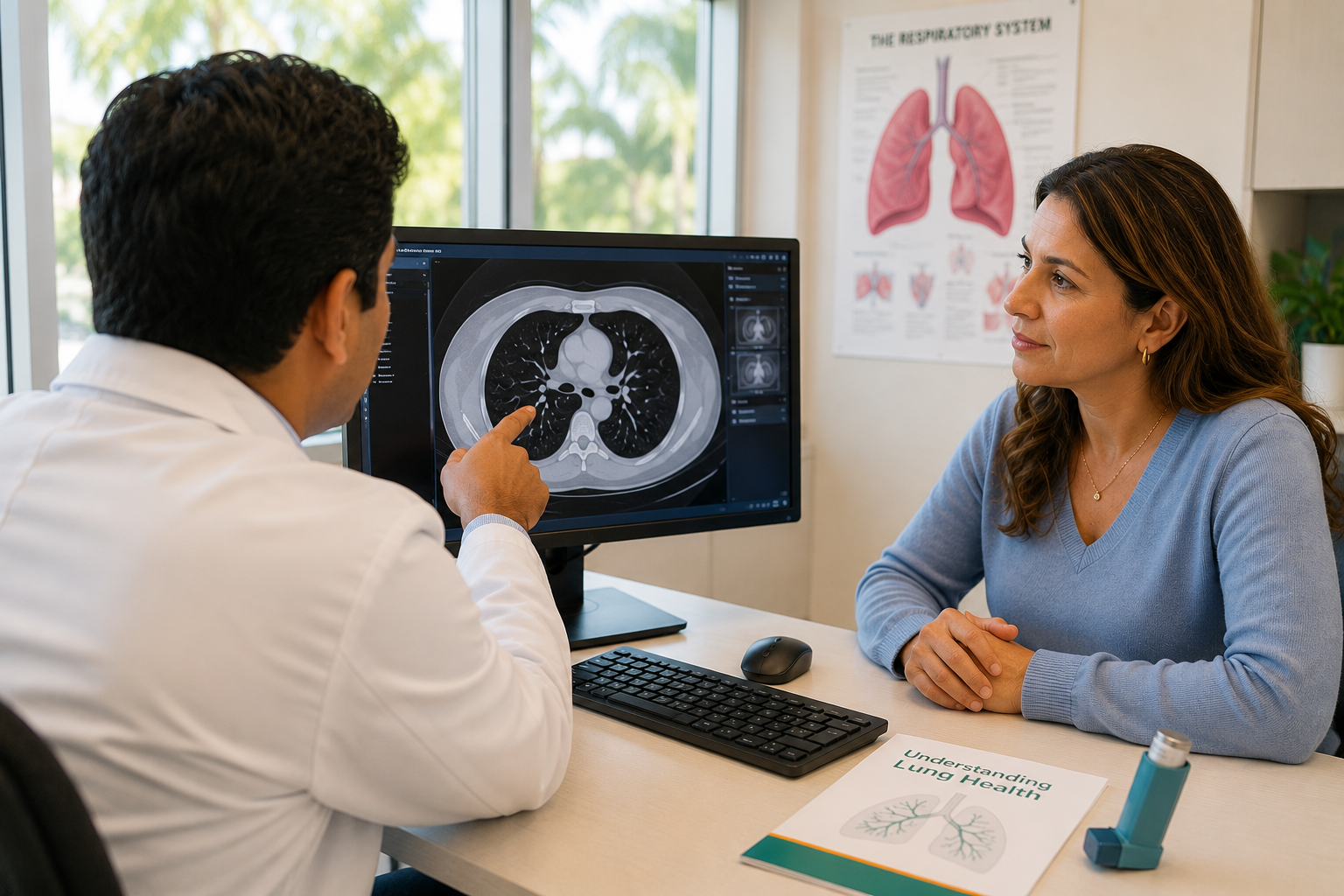
While researchers explore the long-term risk of severe asthma, Dr. Rodriguez is focused on the more immediate concern of ensuring lung cancer symptoms aren’t overlooked. “There are people who are told they have asthma, and they don’t get imaging. They actually have lung cancer, because the symptoms of asthma and lung cancer are similar,” says Dr. Rodriguez.
Similar symptoms include:
- Shortness of breath
- Persistent cough
- Chest tightness
This is especially true for people with asthma and chronic obstructive pulmonary disease, or COPD, and emphysema, which are known risk factors for lung cancer. “If those patients get exacerbated (worsening) symptoms, they may get better with a course of steroids, but they need to be screened for lung cancer.”
What new research means for your health
If you have asthma, the continuing research on a possible connection between asthma and lung cancer isn’t a cause for alarm. Having the condition doesn’t mean you’ll develop lung cancer. It does highlight the importance of managing inflammation and reducing known risks.
That includes:
- Avoiding smoking and secondhand smoke
- Reducing exposure to air pollution and allergens
- Keeping asthma symptoms well controlled
- Knowing when to talk to your doctor about screening
Right now, lung cancer screening is based mainly on age and smoking history, but chronic inflammation from severe asthma can still play a role in the conversation with your provider. “If you’re an adult with asthma and have a history of tobacco exposure, you should strongly consider lung cancer screening,” says Dr. Rodriguez.
None of this is to say that asthma leads to cancer, but it does mean changes in symptoms should never be ignored.
Key takeaways:
- It’s not uncommon for people to mistake asthma for allergies, so speak to your doctor if you experience shortness of breath or wheezing.
- Many people who had asthma as a child have flare-ups when they move to South Florida.
- Women sometimes experience asthma for the first time around menopause.
- Take asthma medications exactly as prescribed.
- Asthma triggers like smoke and air pollution are also carcinogens, so try to avoid them.
- Don’t ignore symptoms that feel different or worse than usual.
- Work with a specialist if your asthma is difficult to control.
Ask your doctor if you’re a candidate for lung cancer screening.
Written by Wendy Margolin. Reviewed by Trishul Siddharthan, M.D.
Tags: asthma inflammation and cancer, asthma lung cancer risk, chronic inflammation and lung cancer, Dr. Estelamari Rodriguez, Dr. Trishul Siddharthan

